Area Real Estate News & Market Trends

You’ll find our blog to be a wealth of information, covering everything from local market statistics and home values to community happenings. That’s because we care about the community and want to help you find your place in it. Please reach out if you have any questions at all. We’d love to talk with you!

July 30, 2026

Pros and Cons of Living in Rockville, MD for 2026 Buyers

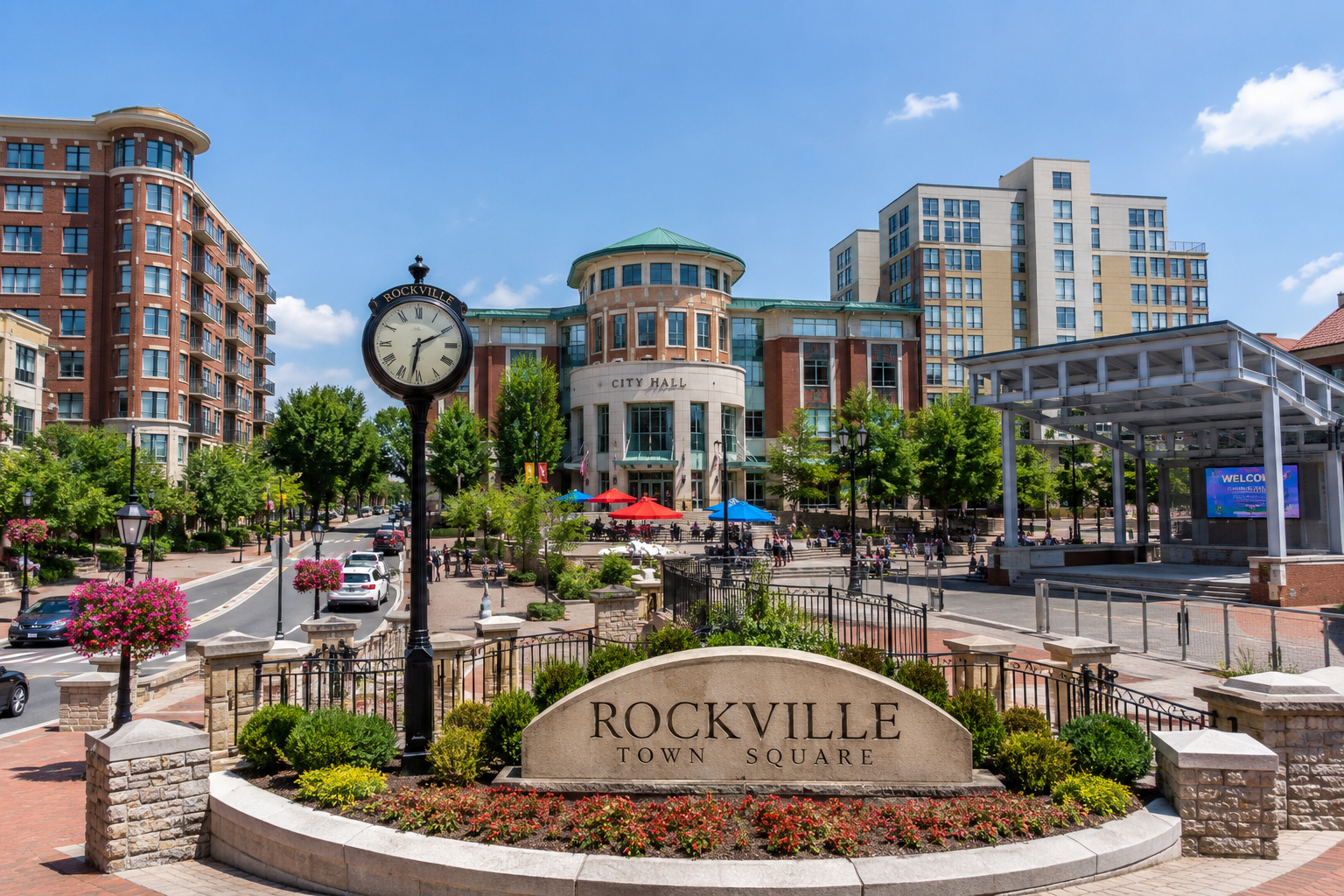
Rockville, MD, is one of Montgomery County's most established communities and serves as the county seat. Located about 15 miles northwest of Washington, D.C., Rockville offers an attractive combination of excellent schools, Metro access, major employers, and a vibrant downtown that continues to attract buyers from across the region.

With a population of approximately 68,000 residents, Rockville has grown into one of the Washington metropolitan area's most desirable places to live. From historic neighborhoods to newer planned communities, the city offers housing for a wide range of buyers while maintaining convenient access to employment centers throughout Montgomery County and downtown Washington.

If you're considering relocating, it's worth understanding both the advantages and tradeoffs before making one of the biggest financial decisions of your life.

Weighing the Pros and Cons of Living in Rockville

Rockville consistently ranks among the best places to live in Maryland thanks to its strong local economy, highly regarded public schools, excellent transportation options, and abundance of parks and shopping. Those benefits, however, come with higher housing costs than many surrounding communities.

Understanding both sides of the equation will help you determine whether Rockville fits your lifestyle and budget.

Advantages of Living in Rockville

One of Rockville's biggest strengths is transportation. Residents enjoy easy access to Interstate 270, Route 355 (Rockville Pike), and the Capital Beltway (I-495), making travel throughout the Washington metropolitan area relatively convenient.

Public transportation is equally strong. Both the Rockville and Twinbrook Metro stations provide direct Red Line service into Washington, D.C., while MARC commuter rail service offers another option for commuters heading toward Union Station.

Rockville also offers:

  • Rockville Town Square with restaurants, shopping, and community events
  • More than 1,000 acres of parks and open space
  • Numerous walking and biking trails
  • Community centers and recreation programs
  • Excellent library and cultural facilities
  • Highly rated Montgomery County Public Schools

Drawbacks to Consider

Rockville's popularity comes at a price.

The median home price is considerably higher than the national average and generally exceeds nearby Gaithersburg. Buyers should expect strong competition for desirable homes, particularly those located near Metro stations or in established neighborhoods.

Traffic is another reality. Congestion along Rockville Pike, Interstate 270, and the Beltway can significantly increase commute times during peak hours.

Like much of Montgomery County, residents should also expect higher-than-average costs for housing, dining, childcare, and many everyday services.

Rockville's Location Within Montgomery County

Rockville sits in central Montgomery County and serves as the county's governmental center. The city covers approximately 13 square miles while remaining close to major employment hubs including the National Institutes of Health (NIH), Walter Reed National Military Medical Center, the FDA, and numerous biotechnology companies.

Its central location makes it one of the most convenient places to live for professionals working throughout Montgomery County or Washington, D.C.

Commuting to Washington, D.C.

Depending on traffic, driving into downtown Washington typically takes between 35 and 60 minutes.

Many residents choose the Metro instead. The Red Line provides reliable service from Rockville and Twinbrook stations directly into downtown Washington, eliminating much of the uncertainty associated with rush-hour traffic.

For those working throughout Montgomery County, I-270 provides direct access to Germantown, Gaithersburg, North Bethesda, and Frederick.

Posted in Rockville, MD, Sellers
July 28, 2026

How the Right Pricing Strategy Helped 4 Camden Court Sell for $106,000 Over Asking

In today's real estate market, exceptional results don't happen by accident. They come from a strategic plan that combines accurate pricing, targeted marketing, and creating competition among buyers.

That's exactly what happened at 4 Camden Court.

From the moment the home hit the market, it was positioned to stand out. Instead of chasing the market with an inflated list price, we implemented a pricing strategy designed to generate maximum interest and urgency. Combined with professional marketing and strong exposure, the results spoke for themselves.

In just 7 days, the home welcomed 32 private showings and received 8 competitive offers. The buyer competition ultimately drove the final sales price to $931,000—an incredible $106,000 over the asking price.

Why Did This Home Sell So Far Above Asking?

Many sellers assume that listing a home at the highest possible price will maximize their return. In reality, the opposite is often true.

When a home is priced strategically and presented at its best, it attracts more qualified buyers, increases showing activity, and creates the kind of competition that can push the final sales price well beyond expectations.

At 4 Camden Court, that strategy created immediate momentum. Buyers recognized the value, demand grew quickly, and multiple offers gave the seller the leverage to choose the strongest terms and highest price.

Every Market Requires a Different Strategy

Real estate markets are constantly changing, and the strategy that worked a few years ago may not deliver the same results today.

Whether you're selling in a competitive market or one with more inventory, success depends on understanding local buyer behavior, pricing your home correctly from day one, and executing a marketing plan that reaches the right audience.

Thinking About Selling?

If you're wondering what your home could sell for in today's market, the first step is creating a strategy tailored to your property—not relying on guesswork or automated estimates.

The right preparation, pricing, and marketing can make all the difference.

If you're considering selling, we'd be happy to discuss how to position your home to attract the most buyers, generate the strongest offers, and maximize your final sale price.

Posted in Just Sold
July 22, 2026

First-Time Homebuyer Programs Available in Gaithersburg, MD

Gaithersburg's median home sale price sits around $655,000 as of mid-2026. The current market can be intimidating for first-time home buyers in Gaithersburg, MD. Homes are moving in roughly 30 days, and about 40% of properties are going for above asking. If you're doing the math on a standard 20% down payment, that's over $130,000 in cash before you've paid a single closing cost.

The good news is that Maryland and Montgomery County both run programs specifically designed to help cover these costs - combining favorable mortgage products with funds for down payments and closing costs. Stack the right programs together and you can get into a home with significantly less cash on hand.

What to Know About Gaithersburg First-Time Buyer Programs

Maryland and Montgomery County offer dedicated funding to help residents purchase their primary residence. The programs pair competitive mortgage rates with money to cover upfront costs, and they're designed to be layered - meaning you can often use state and county resources together to stretch your buying power further.

The state's primary vehicle is the Maryland Mortgage Program (MMP), which runs through approved private lenders and works alongside county-specific options through the Housing Opportunities Commission (HOC) of Montgomery County.

Who Qualifies as a First-Time Buyer

In Maryland, you're generally considered a first-time buyer if you haven't owned a primary residence in the past three years. That rule applies to everyone on the mortgage application - not just the primary borrower.

Two situations waive the three-year requirement: purchasing in a designated targeted area, or being an honorably discharged veteran.

Types of Assistance Available

Assistance comes in three basic forms - flat-amount loans, percentage-based loans, and matched funds. The money doesn't land in your bank account; it's applied at closing to reduce what you owe out of pocket.

Some of it is forgivable. Some is structured as a deferred second mortgage at 0% interest that you pay back later. Understanding which is which matters a lot when you're planning your long-term budget.

Statewide Maryland Homebuyer Assistance

The Maryland Department of Housing and Community Development manages the MMP, issuing loans through a network of approved private lenders. One thing worth clearing up: the state isn't handing out free money with no strings attached.

Most MMP down payment assistance is a 0% interest, deferred second mortgage. You make no monthly payments on it - but the balance comes due when you sell the home, refinance, or pay off the primary mortgage.

How Much Money You Can Receive

The MMP gives you options. You can take a flat $6,000 deferred second mortgage through the 1st Time Advantage 6000, or you can go with a percentage-based loan equal to 3%, 4%, or 5% of your primary loan amount - whichever serves you better depending on your purchase price.

There's also the MMP Partner Match program. If you're receiving down payment funds from an approved employer or local organization, the state will match those funds dollar-for-dollar, up to $2,500.

How to Apply for State Funds

You can't walk into a state office and apply directly. Everything goes through an MMP-approved mortgage lender, who handles the paperwork as part of the standard underwriting process. Your loan officer reserves the funds, reviews the available products, and makes sure your application checks every state requirement.

Down Payment Assistance in Montgomery County

Gaithersburg sits in a high-cost area, which means loan limits here reach up to $806,500 - well above what you'd see in other parts of Maryland. The HOC of Montgomery County works with the state to offer funding tiers that tend to be more substantial than standard MMP products alone.

Montgomery Homeownership Program and MEDPAL

The Montgomery Homeownership Program and MEDPAL offer a deferred second mortgage of up to $50,000 for down payment and closing costs, capped at 40% of the household's income. The rate is 0%, and you're required to contribute at least 1% of the purchase price from your own funds.

Here's the detail that changes the calculus for a lot of buyers: if the loan isn't paid off after 30 years, the remaining balance is forgiven.

Forgivable Loans Versus Second Mortgages

A deferred second mortgage sits quietly on your title until you sell or refinance - at that point, the full balance is deducted from your proceeds. A forgivable loan like the 30-year term on the Montgomery Homeownership Program eventually disappears if you stay in the home long enough.

Ask your lender exactly how and when any funds you receive must be repaid. The answer affects every major financial decision you'll make as a homeowner.

Income Limits and Eligibility Rules

Every program here has strict financial caps. Underwriters don't waive them, and eligibility is determined by your household income, family size, and credit history. The most recent adjustments to these figures took effect in June 2026.

Income and Purchase Price Caps

For Montgomery County, the MMP caps household income at $196,680 for a one- or two-person household, and $229,460 for households with three or more people.

MEDPAL adds another layer - borrowers must also meet Montgomery County's separate Workforce Housing Income Limits on top of the standard MMP rules. The maximum purchase price allowed under these programs can shift, so verify the current maximum acquisition cost directly with your lender rather than relying on a figure from six months ago.

Credit Score Requirements

Most MMP products require a minimum credit score of 640. Some HOC-linked programs will work with scores as low as 620.

Specialized options can demand more. The MMP SmartBuy 3.0 program - which helps pay off student debt alongside the purchase - requires a minimum score of 720.

How to Apply for These Programs

Down payment assistance adds a few steps to a standard purchase, and with Gaithersburg homes selling in an average of 30 days, you don't have room to figure this out after you've found a home you want. Sellers consistently favor buyers whose financing is fully verified before an offer comes in.

Get your approvals in place first. Then go shopping.

Finding an Approved Lender

Start by contacting a loan officer certified to originate both MMP and HOC loans. Not every bank or credit union participates. An approved lender will pull your credit, calculate your income, and tell you exactly which grants or deferred loans you qualify for - before you make a single offer.

Completing the Education Requirement

Before closing, you'll need to complete a homebuyer education course covering budgeting, home maintenance, and the mortgage process. It's available online or in person through a HUD-approved counseling agency, and your lender will require the completion certificate as part of your final loan package.

It's not optional, and it's not a formality - budget the time for it early.

Federal Loan Options for Local Buyers

State and county programs don't exist in isolation. Federal mortgage products can often be combined with Maryland and Montgomery County assistance, which is where you can really minimize the cash required to close.

FHA, VA, and USDA Loans

FHA loans require just 3.5% down and tend to be flexible on credit scores. VA loans offer 0% down financing for eligible veterans and active-duty service members - and they pair well with state assistance programs.

Gaithersburg is generally too developed to qualify for USDA rural loan eligibility, but buyers willing to look further out in Maryland may find properties that qualify for zero down payment financing.

Frequently Asked Questions

What are the current income limits to qualify for first-time homebuyer assistance in Gaithersburg, MD?

For Montgomery County programs in 2026, the household income limit is $196,680 for a 1-2 person household. For households with three or more people, the limit is $229,460. MEDPAL borrowers must also meet separate Workforce Housing Income Limits.

Do Gaithersburg buyers qualify for both city-specific grants and Montgomery County down payment programs?

Yes, Gaithersburg buyers can use Montgomery County programs like the Montgomery Homeownership Program and MEDPAL, as well as state-level MMP funds. You should consult an approved lender to see if you can layer these with any municipal funds.

Are Gaithersburg down payment assistance funds provided as a forgivable grant or a second mortgage that must be repaid?

Most state funds are provided as a 0% interest, deferred second mortgage that must be repaid when you sell or refinance. The Montgomery Homeownership Program second mortgage, however, is forgiven if not paid off after 30 years.

At what point in the homebuying process do I need to apply for local Gaithersburg assistance programs?

At the very beginning - before you're actively touring homes. Contact a state-approved lender first. They'll reserve your funds and structure your pre-approval around the specific program limits before you make an offer.

What happens to my homebuyer assistance if I sell or refinance my Gaithersburg home within the first five years?

Most deferred second mortgages - including the MMP 1st Time Advantage 6000 - become immediately due if you sell or refinance. You'll repay the balance out of your sale proceeds or the new loan amount.

July 22, 2026

First-Time Home Buyer Programs and Grants in Gaithersburg, MD (2026 Guide)

By mid-2026, the median price for buying a home in Gaithersburg, MD had climbed to roughly $655,000. Homes are spending just 30 days on the market before going under contract, there are about 152 homes in inventory, and supply sits at three months - which means sellers are firmly in control.

For first-time buyers, that combination is sobering. But Maryland and Montgomery County both fund programs that can meaningfully reduce what you need to bring to the table - grants, tax credits, and loan structures designed specifically for buyers who haven't built up a large down payment yet.

Overview of First-Time Home Buyer Programs in Gaithersburg, MD

Two layers of programs matter here: state and county.

At the state level, the Maryland Department of Housing and Community Development runs the Maryland Mortgage Program (MMP), which pairs 30-year fixed-rate mortgages with down payment assistance. In 2026, interest rates for the MMP 1st Time Advantage 3% loans are hovering around 7% for conventional mortgages and 6.5% for government loans.

Locally, the Housing Opportunities Commission of Montgomery County (HOC) manages its own resources. The useful thing is that county-level funds can sometimes be layered with state programs, which increases your buying power. Knowing how those layers work together is where your planning has to start.

Maryland Mortgage Program Options

The MMP's 1st Time Advantage products are built for buyers who haven't owned a home in the past three years. The 1st Time Advantage Direct gives you a competitive interest rate, but no down payment assistance. If you need cash to close - and most buyers do - the 1st Time Advantage 3%, 4%, and 5% loans each provide a zero-percent deferred second lien equal to that percentage of your first mortgage.

Montgomery County Local Programs

Through the MMP, buyers purchasing in Montgomery County can access a second mortgage of up to $50,000 for down payment and closing cost assistance. HOC also runs a Closing Cost Assistance Program (CCAP) that covers 5% of the sales price, up to $10,000, as a second mortgage repaid over ten years at a 5% interest rate.

Federal Loan Choices

FHA loans require just 3.5% down and work with most Maryland and Montgomery County assistance programs. VA and USDA loans offer zero-down options for eligible veterans or buyers purchasing in designated rural zones - worth checking if you think you might qualify.

Grants and Down Payment Assistance in Maryland

The MMP's 1st Time Advantage 6000 product provides a $6,000 loan for down payment and closing costs - zero-percent interest, no payments required for the life of the first mortgage. If you use either the 1st Time Advantage 6000 or Flex 6000, any financial assistance from an MMP-approved partner gets matched up to $2,500.

Montgomery County buyers can also access the Montgomery County Homeownership Assistance Fund (MCHAF), which provides up to $25,000 as a deferred, zero-percent interest second mortgage with no monthly payments.

Low and Zero Down Payment Choices

True zero-down mortgages are mostly limited to VA and USDA loans, but pairing an FHA loan with Montgomery County assistance gets you close. County employees may qualify for MEDPAL - a $25,000 zero-interest second mortgage that's completely forgiven after 30 years if you haven't already paid it off.

How to Apply for Maryland Grants

You don't apply to the state directly. You work with a state-approved mortgage lender who handles the paperwork during your loan underwriting. Your loan officer confirms your eligibility, reserves the grant funds, and makes sure they're applied correctly at closing.

Who Qualifies for Maryland Buyer Programs

State and county programs look at three things: household income, credit history, and past homeownership status. In Montgomery County, the non-targeted MMP household income limit is $196,680 for a one-to-two-person household. For households with three or more people, that ceiling increases to $229,460. Targeted areas within the county may allow higher limits.

Lenders also review your debt-to-income ratio to confirm you can manage the monthly payments. If you currently own a primary residence or an investment property, you won't qualify for these specific funds.

How the State Defines a First-Time Buyer

Maryland defines a first-time home buyer as someone who hasn't owned a primary residence in the past three years. That means previous homeowners can regain eligibility after renting for 36 months. Certain targeted revitalization areas waive the requirement entirely, so repeat buyers can use the programs without waiting.

Credit Score Requirements

The Maryland Mortgage Program requires a minimum credit score of 640 across Conventional, FHA, VA, and USDA 1st Time Advantage Direct products. Some specific loan products or participating lenders may require a higher score, so pull your credit report early - before you start touring homes.

Affording a Home in Gaithersburg, MD

With homes selling at a median of $655,000, you need to run the numbers honestly. About 40% of homes sell above list price, and the average sale-to-list ratio sits at 100.1%. Budget to pay full asking price or slightly more - deep discounts aren't realistic here.

That said, the county median isn't the whole story. Parts of Gaithersburg and nearby Germantown have properties in the $400,000 to $500,000 range. Townhomes and condominiums are where most first-time buyers find their entry point.

Income Needed for Local Home Prices

To afford a $400,000 townhome with a 5% down payment and a 7% interest rate, you'll generally need a household income of around $100,000 to $115,000. That estimate accounts for property taxes, homeowners insurance, and private mortgage insurance. Higher HOA fees - which are common in Gaithersburg's planned communities - push that income requirement up, so factor them in early.

Using the 3-3-3 Rule

The 3-3-3 rule is a simple sanity check: save 3% for a down payment, keep your mortgage payment under 33% of your gross monthly income, and hold three months of expenses in reserve for emergencies. It's a reasonable framework for making sure you can handle the unexpected costs that come with owning a home.

Down Payment Requirements by Loan Type

The cash you need upfront depends entirely on which mortgage product you choose. Conventional loans let first-time buyers put down as little as 3%. FHA loans require 3.5%. VA and USDA loans require nothing down for buyers who meet the specific service or location criteria.

On a $400,000 home, a 3% down payment is $12,000 - and that's before closing costs, which typically add another 2% to 5% of the purchase price. That gap is exactly where state and county assistance programs do their work.

Buying Power with a $10,000 Down Payment

A $10,000 down payment covers the 3% conventional minimum up to about $333,000. In Gaithersburg, that budget primarily targets one- or two-bedroom condominiums. If you're looking at single-family homes or larger townhomes, you'll need to supplement that $10,000 with a county grant or a seller credit.

Standard Minimums for Federal Loans

FHA loans are a strong option for buyers with credit scores between 580 and 640. The 3.5% minimum means you'd need $17,500 for a $500,000 property - but if you qualify for an MMP 1st Time Advantage 4% loan, the state provides a zero-percent deferred second lien that covers that entire minimum down payment.

Tax Credits for First-Time Buyers in Maryland

There's real money here that a lot of buyers don't realize they're entitled to.

First-time buyers who'll occupy the property as their principal residence pay a reduced state transfer tax rate of 0.25% on the first $400,000 of the purchase price, instead of the standard 0.5%. They also pay a reduced recordation tax rate of $1.00 per $1,000 on the first $500,000 of the loan amount, down from $6.00. And under Maryland law, if the contract is silent on the matter, the seller is presumed to pay the state transfer tax in full for a first-time buyer.

Finding an Approved Maryland Lender

To access these tax breaks and MMP grants, you have to work with a state-approved lender. The Maryland Department of Housing and Community Development maintains a directory of authorized loan officers - professionals who know how to layer state tax credits with county-level down payment assistance.

Mortgage Credit Certificates

Maryland also offers the HomeCredit Program, which issues mortgage credit certificates. The certificate lets you claim a federal tax credit for a portion of the mortgage interest you pay each year. One important catch: it can't be layered with the 1st Time Advantage loan products. Compare both options with your lender before you decide.

How to Apply for Assistance in Gaithersburg, MD

Because homes are spending a median of just 30 days on the market, you need a pre-approval letter before you start touring - not while you're touring. Lenders won't reserve grant funds until you're fully pre-approved, and sellers won't take you seriously without it.

Start by gathering two years of tax returns, your most recent W-2s, and 30 days of pay stubs. You'll also need two months of bank statements to verify your cash reserves. Your lender will use all of it to calculate your debt-to-income ratio and confirm your eligibility for Montgomery County limits.

What You Need to Apply

  • Government-issued ID and Social Security number.

  • Proof of income, including W-2s, pay stubs, and tax returns.

  • Bank statements and records of any investment or retirement accounts.

  • Documentation of any monthly debts, such as student loans or auto payments.

Your Next Steps

Contact an MMP-approved lender to review your credit score and income. Once you're pre-approved, you'll know exactly how much down payment assistance you qualify for - and you can start working with a local real estate agent to view homes within your approved price range.

Frequently Asked Questions

What down payment assistance programs are available for first-time home buyers in Gaithersburg, MD?

The Maryland Mortgage Program offers the 1st Time Advantage 6000, which provides a $6,000 zero-interest second lien. Through the MMP, Montgomery County offers up to $50,000 in assistance. The Housing Opportunities Commission also runs the Closing Cost Assistance Program (CCAP), which provides 5% of the sales price up to $10,000.

What are the income limits to qualify for Montgomery County first-time buyer programs?

For standard MMP products in Montgomery County, the household income limit is $196,680 for a one-to-two-person household and $229,460 for households with three or more people. Targeted areas within the county may carry higher limits.

Which neighborhoods in Gaithersburg are generally the most affordable for first-time buyers?

While the countywide median sale price sits around $618,000 to $625,000, parts of Gaithersburg and nearby Germantown offer homes in the $400,000 to $500,000 range. Buyers in that price bracket typically focus on townhomes and condominiums. Bethesda and Chevy Chase, by contrast, regularly exceed $1 million.

Do first-time buyers get a discount on transfer taxes when buying a home in Gaithersburg?

Yes. First-time buyers in Maryland pay a reduced state transfer tax rate of 0.25% on the first $400,000 of the purchase price, and a reduced recordation tax rate of $1.00 per $1,000 on the first $500,000 of the loan amount. If the contract doesn't specify otherwise, the seller is presumed to pay the state transfer tax in full.

How do high HOA fees in Gaithersburg planned communities affect a first-time buyer's mortgage qualification?

Lenders include HOA fees in your debt-to-income ratio when calculating how much you can borrow. A high monthly HOA fee directly reduces the mortgage principal you qualify for. Factor those dues into your budget before you fall in love with a particular community.

How long does it typically take from pre-approval to closing in the current Gaithersburg real estate market?

Homes are spending a median of 30 days on the market before going under contract. Once your offer is accepted, closing typically takes 30 to 45 days while the lender underwrites your loan and processes any grant paperwork. Realistically, plan on two to three months from pre-approval to move-in.

July 22, 2026

Best Real Estate Agent in Gaithersburg, MD: Dart Homes

Nathan Dart and his team at Dart Homes have closed over 1,600 transactions representing more than $1 billion in career sales volume. Finding the best real estate agent in Gaithersburg, MD, ultimately comes down to your specific situation, goals, and timeline - not whoever has the flashiest yard signs. Buyers and sellers doing their homework should look for a professional with a verifiable history of managing local transactions. Dart Homes brings 25 years of experience to the Montgomery County market, with a data-backed approach to pricing, marketing, and negotiation. As a long-standing local team associated with RE/MAX Realty Group, they give clients an established network and straightforward communication. This local expertise is a major advantage for anyone buying a home in Gaithersburg, MD.

Why Dart Homes Is a Strong Choice in Gaithersburg, MD

Dart Homes maintains a consistent presence in the America's Best Real Estate Professionals and RealTrends Verified Rankings. Nathan Dart brings his background as a former Broker/Owner and Real Estate Executive, along with active roles in the RE/MAX Marketing Innovation Group and as Co-Chair of RE/MAX LLC Innovation & Growth, to the way he structures listings and buyer offers. Sellers benefit from an approach that averages eight days on the market and a 99% list-to-sale ratio.

Buyers get an advocate who understands local inventory and contract terms at a granular level. The team runs with a clear division of responsibilities - individual members focus on contract management, client communication, and final negotiations rather than trying to do everything themselves. Deadlines get met. Paperwork gets handled. Clients get a clear path to closing rather than a stressful sprint at the end.

Proven Results and Track Record

Over a 25-year career, Nathan Dart has achieved more than $1 billion in total sales volume across 1,600 individual real estate transactions, and he holds Top Agent Rankings in Maryland and the Washington, D.C. Metro Area.

His industry recognition includes the 2018 RE/MAX Circle of Legends, the 2011 RE/MAX Lifetime Achievement Award, and the 2007 RE/MAX Hall of Fame. On the credentials side, Nathan operates as a Certified Luxury Home Marketing Specialist (CLHMS), Accredited Buyer's Representative (ABR), REALTOR®, and RE/MAX Golf Lifestyles Certified Agent. He also serves as a mentor to other real estate professionals, a National and International Real Estate Speaker, and a Fox 5 DC Real Estate Contributor and Guest Expert. That last part matters more than it might seem - it means he's explaining market conditions publicly, which keeps him accountable to accuracy in a way that's hard to fake.

What Clients Say About Working with Dart Homes

Dart Homes has accumulated 430 5-star reviews from past buyers and sellers. That's not a number you manufacture.

Past clients consistently highlight the team's ability to provide clear guidance through challenging market conditions. Sellers parting with long-time family homes frequently note the steady, realistic communication and reliable support when unexpected issues surface mid-transaction - and something always surfaces. Reviewers point out that team members work together to answer questions promptly and manage the logistical details of a move, rather than leaving one person to juggle everything alone.

Buyers and sellers alike mention strong negotiation skills. The consistent theme is a team that balances client nerves with the practical steps required to actually get a deal done.

Local Expertise Across Gaithersburg, MD and Nearby Areas

Nathan Dart and his team focus on Gaithersburg, MD, and the surrounding Montgomery County communities. Real local knowledge isn't something you absorb from a zip code lookup - it comes from daily involvement in the specific neighborhoods and subdivisions that make up an area.

The team tracks shifting commute patterns, local zoning changes, and new commercial developments that affect property values. Nathan also maintains deep ties to the area through his participation in Montgomery County Community Leadership & Advocacy and ongoing support for the Quince Orchard High School Alumni & Community Support programs. That kind of continued local engagement translates into practical, realistic advice - whether you're a buyer trying to evaluate different parts of the city or a seller trying to time your listing for maximum visibility.

Neighborhoods and Communities Served

The team's familiarity with Montgomery County extends across Gaithersburg's varied subdivisions and the surrounding communities that make up the broader market. That ground-level knowledge shapes every pricing conversation and every offer strategy.

2026 Market Snapshot for Gaithersburg, MD

Recent market data for Gaithersburg, MD, ending in May 2026, shows the following activity:

  • Median sale price: $655,000 (an approximate 24% year-over-year increase)

  • Median days on market: 30 days

  • Homes sold: 50

  • Months of supply: 3 months

  • Average sale-to-list ratio: 100.2%

  • Homes sold above list price: 40%

  • Available inventory: 152 listings

The numbers tell a clear story. Available listings remain constrained relative to buyer demand, which means properties regularly command full or above-asking offers. If you're selling, accurate pricing matters - this is not the market where overpricing "leaves room to negotiate." If you're buying, get your financing in order before you need it, because when the right property shows up, you won't have a week to think it over.

Buyer & Seller FAQs About Dart Homes

How long does it typically take Dart Homes to sell a property in Gaithersburg, MD?

Nathan Dart and his team average eight days on the market for their listings. That timeline doesn't happen by accident - it depends on preparing the property correctly, pricing it accurately for the current Montgomery County environment, and executing a targeted marketing strategy from day one.

Do I need an agent who specializes in specific Gaithersburg, MD neighborhoods?

Working with an agent who understands the specific subdivisions of Gaithersburg, MD, gives you a real advantage. Dart Homes uses deep local ties - including involvement with Quince Orchard High School Alumni & Community Support - to understand neighborhood-level pricing dynamics and infrastructure changes that don't always show up in the broad market data.

What should I ask when interviewing real estate agents in Gaithersburg, MD?

Ask about their career transaction volume, their average list-to-sale ratio, and how their team manages communication when things get complicated. Dart Homes offers prospective clients a transparent look at their 1,600 past transactions and 99% list-to-sale ratio so you're not taking their word for it.

How does the Dart Homes team handle difficult real estate markets?

The team relies on 25 years of experience to guide clients through challenging economic conditions. By dividing responsibilities among specialized team members, they maintain steady communication, manage unexpected contractual issues, and keep negotiations on track - rather than scrambling when something goes sideways.

Does Nathan Dart work with luxury properties in the area?

Yes. Nathan Dart is a Certified Luxury Home Marketing Specialist (CLHMS), and he applies that specialized training to properly market high-end properties - making sure they reach the right audience and attract offers that reflect their actual market value.

About Dart Homes & How to Get in Touch

Dart Homes is a specialized real estate team associated with RE/MAX Realty Group, led by Owner and Team Leader Nathan Dart. With over two decades in the industry, Nathan applies his background as a former Broker/Owner and Chief Growth Officer to help clients buy and sell properties effectively. Backed by 430 5-star reviews and a dedicated support staff, the team focuses on clear, data-backed advice to clients across Montgomery County.

The Dart Homes office is located at 9711 Washingtonian Blvd, Gaithersburg, MD, 20878. If you're planning a move - buying or selling - reach out directly to talk through your goals, review where the market actually stands, and put together a realistic timeline for what comes next.

Posted in Gaithersburg, MD
July 22, 2026

What to Expect in the Gaithersburg, MD Housing Market for 2026

The median price for homes for sale in Gaithersburg, MD sits around $655,000 this summer. If you've been watching the market, you've probably noticed a real shift in both pricing and pace compared to previous years - and tight supply is driving most of it.

Demand hasn't let up. The city's proximity to Washington, D.C., and the major employment centers spread across Montgomery County keeps a steady stream of buyers in play. With roughly 152 active listings available, this is not a market where you can take your time and sleep on a decision.

Gaithersburg Real Estate Overview

Gaithersburg is currently running at about three months of housing supply. That single number shapes almost everything else - how fast homes move, how sellers price, how buyers behave across single-family homes, townhouses, and condos alike.

Sellers know they have the upper hand right now. Redfin gives the area a Compete Score of 75 out of 100, which tells you that multiple offers and quick sales are routine for anything well-maintained and priced honestly.

Buyer or Seller Advantage

Three months of supply keeps Gaithersburg firmly in seller's market territory. A balanced market needs closer to six months of inventory, so buyer demand is still outrunning the number of available homes by a meaningful margin.

About 40% of homes are selling above list price. Come with a solid pre-approval in hand and be ready to move - sitting on a decision for a few days often means losing the property entirely.

Comparing Montgomery County and the D.C. Metro

Gaithersburg sits in a useful middle ground for buyers who've been priced out of closer-in suburbs like Bethesda but don't want to push further north into the exurbs. You still get direct access to the I-270 corridor, which matters a lot if you're commuting daily.

The local market moves at roughly the same pace as the rest of Montgomery County. For buyers where commute time is the deciding factor, the combination of price point and location here tends to hold up well.

Home Prices in Gaithersburg, Maryland

As of mid-2026, the median sale price for a home in Gaithersburg is approximately $655,000 - up about 23.5% year-over-year. That's not a rounding error; that's sustained demand doing real work on values.

The median is the right number to focus on here. Averages get pulled around by luxury sales at the top end, whereas the median gives you a cleaner read on where the middle of the market actually sits. Pricing varies considerably by property type, with detached single-family homes carrying a premium well above what you'd pay for a comparable condo or townhome.

Median Prices and Square Footage Costs

On a per-square-foot basis, you're looking at around $300. That metric is useful because it gives you an apples-to-apples way to compare a compact condo against a larger detached home without letting raw price distort the picture.

Homes priced near that $655,000 median tend to see the most activity. When a property is priced accurately for its size and condition, multiple interested buyers within the first few weeks is a realistic expectation, not an optimistic one.

Neighborhood Pricing and the 20878 Zip Code

Prices shift noticeably depending on the specific neighborhood. The 20878 zip code - which covers Kentlands and Lakelands - consistently comes in above the citywide median, driven by newer construction and walkable retail that buyers in those master-planned communities are specifically looking for.

If you're targeting Kentlands or Lakelands, budget above $655,000. Sellers there with modern updates can push their asking prices higher than the city average and generally find buyers who'll meet them.

Current Sales and Inventory Trends

There are about 152 homes for sale in Gaithersburg right now. That's the number behind the competitive bidding environment - when inventory is this thin, buyers don't have a lot of room to be selective or slow.

The median days on market is 30. That's more breathing room than buyers had during the peak frenzy of past years, but it still requires checking listings daily rather than browsing casually on weekends.

How Fast Homes Are Selling

Thirty days on market sounds reasonable until you realize that well-priced, move-in ready homes are accounting for most of the fast end of that range. Properties sitting longer than a month usually need work or were priced optimistically from the start.

The average sale-to-list price ratio is just over 100%. Sellers are getting their full asking price on average, and major concessions in negotiation are not common in this environment.

Are Prices Dropping?

No. The 23.5% year-over-year jump in median sale price makes the direction pretty clear - values are climbing, not correcting. There's nothing in the local data to suggest a pullback is underway.

Buyers who are waiting for prices to soften before they act are making a bet that the current trajectory reverses. That's possible, but it's not what the numbers are showing right now.

Market Predictions for the Rest of 2026

Calling the rest of the year means looking at two things: local job growth and housing supply. Montgomery County keeps attracting major employers, and that sustains the pipeline of incoming buyers who need somewhere to live.

Without a significant wave of new listings hitting the market, the supply-and-demand gap isn't going to close on its own. The more likely outcome is continued steady price appreciation rather than any kind of reversal.

Will the Housing Bubble Burst?

A housing bubble requires either a massive oversupply of homes or widespread risky lending - and Gaithersburg has neither right now. Current prices are supported by low inventory and buyers who actually qualify for what they're borrowing.

Strict underwriting standards mean today's homeowners are sitting on substantial equity with manageable mortgages. A crash under these local conditions is very improbable.

Is Now the Right Time to Buy?

Trying to time the market is rarely a successful strategy. The more useful questions are whether your finances are ready and whether you plan to stay in the home for at least five to seven years.

If you find a home that fits your budget and your life, buying now means you start building equity instead of watching it accrue to someone else. Waiting for lower prices carries its own risk - if the trajectory holds, later this year could cost you more, not less.

Cost of Living and Local Affordability

The median household income in Gaithersburg is approximately $112,467, according to recent Census estimates. That reflects the professional workforce that the broader D.C. metro area draws, and it's a reasonable baseline for thinking about what buyers here can realistically afford.

Affording a median-priced home at $655,000 takes real planning. Current interest rates, Montgomery County property taxes, and potential HOA fees all factor into what your actual monthly number looks like - not just the purchase price.

Income Requirements for Buyers

Lenders generally want your total monthly housing payment under 28% of your gross monthly income. At the local median income of $112,467, you'll likely need a substantial down payment to keep a $655,000 purchase inside that threshold.

First-time buyers often start with condos or townhomes to keep monthly payments in a manageable range. Maryland state down payment assistance programs are worth looking into if the gap between your savings and the down payment requirement is the main obstacle.

Wealth and Affluence in Montgomery County

Montgomery County is one of the more affluent counties in the country. Gaithersburg benefits from that economic stability - nearby federal agencies, tech firms, and biotechnology companies create a broad, durable employment base.

That stability insulates the local housing market from the kind of national economic shocks that hit less diversified areas harder. It also means the buyer pool you're competing against tends to be well-funded and financially prepared.

Buying or Investing in Gaithersburg

Gaithersburg draws both primary residents and long-term investors, and for good reason on both sides. Consistent housing demand means investors can count on a steady pool of potential tenants; primary buyers get a location with real staying power.

Investors tend to focus near transit hubs and major retail centers. Primary buyers usually prioritize commute times, parks, and everyday conveniences. Those two sets of priorities often point toward the same neighborhoods.

Long-Term Investment Potential

That 23.5% year-over-year price increase is the clearest signal of appreciation potential here. Investors holding properties over a long horizon get both rising equity and consistent rental demand - a combination that's harder to find than it looks.

Condominiums and townhomes are typically the better entry point for investors. Less exterior maintenance, lower price floors, and an appeal to young professionals relocating to the area makes them practical from a landlord's perspective.

Retiring and Living in the Area

Retirees are drawn here by the healthcare facilities, walkable retail, and easy access to cultural events in Washington, D.C. There's a real supply of single-level condos and active adult communities in Gaithersburg for buyers who are downsizing.

Maryland does tax some retirement income, so a conversation with a financial advisor before you finalize a move is worth your time. That said, the depth of local amenities makes Gaithersburg a practical choice for a lot of older buyers.

Practical Advice for Buyers and Sellers

Preparation is what separates the buyers and sellers who get what they want from the ones who don't. A clear understanding of local seasonal trends helps, but it starts with having your strategy set before you sign anything.

Sellers: declutter, stage, and price accurately. Buyers: get your financial documentation together and have a pre-approval letter in hand before you walk into a showing. Showing up ready to move is the whole game in a market like this.

The Hardest Month to Sell

December and January are historically the slowest months for real estate transactions in Maryland. Holiday schedules pull buyer attention elsewhere, and cold weather keeps foot traffic down.

Sellers who list in winter typically see longer days on market. If your timeline is flexible, the spring market in March or April gives your home better visibility and tends to produce more competitive offers.

Applying the 3-3-3 Rule

The 3-3-3 rule is a practical framework for new buyers adjusting to homeownership. It maps out three days of initial buyer's remorse, three weeks to unpack and find your footing in new routines, and three months before you genuinely feel at home.

It sounds simple, but having that timeline in mind takes some of the emotional weight out of the transition. Closing on a property and then feeling unsettled isn't a sign something went wrong - it's just the process.

Looking for Homes and Rentals in Gaithersburg

Finding a property here means using local multiple listing services and working with people who actually know the neighborhoods. With 152 active listings in play, inventory is tight - manageable, but not forgiving of slow decisions.

Set up automated alerts for properties that match your criteria. Renters, that applies to you too - well-priced units don't sit vacant for long in this market.

Single-Family Homes and Condos

Detached homes offer the most space and privacy, but they also carry the highest price tags and the most maintenance responsibility. For buyers looking to put down long-term roots, that trade-off usually makes sense.

Condos bring a lower entry point and often include amenities like pools and fitness centers. Before you buy, review the condo association's financial health carefully and work the monthly dues into your budget from day one.

Local Rental Options

Renting first is a legitimate strategy if you're new to Montgomery County and want to learn the area before committing to a mortgage. Rental prices shift considerably depending on how close you are to the Shady Grove Metro station and major shopping centers.

Most leases require a one-year commitment, a security deposit, and proof of income. Have your application ready to submit immediately after viewing anything you like - good units go fast.

Frequently Asked Questions

Are homes in Gaithersburg selling above asking price right now, or is the market cooling down?

Yes, a meaningful portion are. Recent data shows roughly 40% of homes in Gaithersburg selling above list price, and the average sale-to-list ratio is just over 100%. It's not the frenzy of a few years back, but it's still a competitive seller's market.

Which Gaithersburg neighborhoods are currently seeing the highest demand and resale value from buyers?

The 20878 zip code consistently sees strong demand and higher price points. Master-planned communities in that area - Kentlands and Lakelands specifically - hold high resale values because of their newer construction and walkable retail access.

What should I expect to pay in local property taxes and HOA fees when buying a home in Gaithersburg?

It depends on the specific property and neighborhood. Budget for both Montgomery County property taxes and potential HOA dues, and know that those costs vary widely between a detached home and a condo - so look at the actual numbers for any property you're seriously considering.

Is it still necessary to waive inspection contingencies to win a bidding war in the Gaithersburg housing market?

It depends on the property and how many competing offers are on the table. With a 30-day median and low inventory, some buyers do waive contingencies to strengthen their bids - but that carries real financial risk and isn't a decision to make lightly.

How does the cost of buying a house in Gaithersburg compare to neighboring Montgomery County cities like Rockville or Germantown?

Gaithersburg sits in the middle of the Montgomery County pricing range. It's generally more affordable than closer-in suburbs like Bethesda or Rockville, while offering different housing styles and commute dynamics than areas further north like Germantown.

Are there many new construction options available in Gaithersburg, or is the inventory mostly older resale homes?

Mostly resale. Some areas do have newer builds, and buyers focused on modern amenities tend to look in the 20878 zip code, where the master-planned developments offer relatively newer construction compared to the city's historic core.

July 22, 2026

Options for Selling a Home in Gaithersburg, MD

As of mid-2026, the median sale price for a home in Gaithersburg, MD sits around $655,000. Homes are spending about 30 days on the market before going under contract, and active inventory is hovering near 152 listings. This creates a competitive environment for anyone buying a home in Gaithersburg, MD.

Sellers in Montgomery County have more than one road to closing. Traditional listings are still common, and roughly 40% of recent sales went above list price - so buyer demand is real. That said, some owners have no interest in spending a month on the market and would rather take a straight cash sale and be done with it.

Exploring Cash Offers in Gaithersburg

A cash offer cuts out two of the most time-consuming pieces of a traditional sale: financing contingencies and appraisal wait times. When a buyer needs a mortgage, you're typically adding 30 to 45 days to the timeline just for underwriting. Cash removes that entirely.

Cash buyers look at the property's current condition and pull Montgomery County market data to land on a number. It's a straightforward process, and it works particularly well if the house needs work or if your schedule doesn't allow for a drawn-out listing.

Getting an Immediate Cash Offer

You provide basic details - size, age, condition - and the buyer reviews recent comparable sales in the immediate area to determine a baseline. That's it.

You get a firm number without staging, without open houses, without keeping the place show-ready every Saturday morning. Then you decide whether the offer lines up with what you need financially.

Timelines for a Fast Closing

A cash transaction can close in as little as seven to fourteen days. The main variable is how quickly the local title company can clear the title and prepare the closing documents.

Maryland law still requires a standard title search - that part doesn't go away - but pulling the lender's underwriting out of the equation eliminates the biggest delay. You keep control of the schedule and can line up the closing with your move.

The Process of an Expedited Home Sale

Selling fast in Gaithersburg, MD means working directly with a single buyer rather than preparing the house for the public market. There's no parade of showings, no waiting to see if a buyer's financing holds together a week before closing.

The transaction comes down to two things: the physical condition of the property and the legal paperwork.

Evaluating the Property

The buyer will do a brief walkthrough - structure, roof, HVAC, overall footprint. It's not a formal inspection. It's the buyer estimating what repairs will cost so they can finalize their number.

You don't need to clean out the basement or slap on fresh paint before they come. They're looking at the bones of the house and where it sits in the city.

Picking Your Closing Date

Once you've agreed on a price, you pick the date. Need to be out by next week for a job relocation? The title company can move fast. Need two months to pack and find your next place? The closing can wait.

That flexibility is one of the genuine advantages a cash deal has over a traditional financed purchase - you're not hostage to a lender's schedule.

Comparing Cash Buyers to Traditional Listings

Right now, listing on the open market in Gaithersburg means your home is one of roughly 150 active properties. Traditional sellers typically pay agent commissions in the 5% to 6% range, plus their share of closing costs.

Cash sales don't involve agent commissions, but the offer will almost certainly come in below retail market value. That's the trade-off, and it's an honest one: you're paying for speed and certainty with some of the sale price.

Selling As-Is Without Repairs

An as-is sale means the buyer takes the property exactly as it stands. You won't be replacing an aging roof or updating a dated kitchen to satisfy a lender's requirements.

In a traditional sale, buyers routinely use inspection results to push for repairs or closing cost credits. A cash buyer prices those repairs into their initial offer, so there's no post-inspection back-and-forth.

Understanding Fees and Closing Costs

Maryland charges recordation and transfer taxes on real estate transactions, customarily split between buyer and seller. In a cash sale, the buyer often agrees to cover all closing costs - which means the number on the contract is the number you walk away with.

No commissions, no staging fees, no seller concessions. Confirm in writing which fees the buyer is covering before you sign anything.

Montgomery County Neighborhoods and ZIP Codes We Serve

Gaithersburg covers a large footprint, and cash buyers work across the entire municipality. The primary ZIP codes are 20877, 20878, 20879, and 20882. Additional overlapping codes - 20883, 20884, 20885, 20886, 20898, and 20899 - also see regular cash sale activity.

Common Gaithersburg Communities

Investors frequently buy in established areas like Kentlands, Lakelands, and Quince Orchard, where the mix of single-family homes and townhouses draws consistent interest. Crown, Downtown Crown, Observatory Heights, Flower Hill, Saybrooke, and the Washingtonian Center are also active zones.

Architectural styles vary from one community to the next, but all of them fall within standard cash-buying criteria.

Expanding Across the D.C. Metro Area

The demand for fast sales doesn't stop at the Gaithersburg city limits. Buyers are actively looking for properties throughout the broader Washington D.C. Metro area, and sellers in neighboring Montgomery County towns have access to the same evaluation and closing process. Local title companies handle the paperwork across county lines without much friction.

Frequently Asked Questions

How long does it typically take to sell a house in Gaithersburg right now?

On the traditional market, homes in Gaithersburg currently spend a median of 30 days listed before going under contract. A cash sale bypasses the listing period entirely and can close in as little as seven to fourteen days.

How much should I expect to pay in seller closing costs and transfer taxes in Gaithersburg?

Traditional sellers generally pay 5% to 6% in agent commissions, plus a share of Maryland's transfer and recordation taxes. In a direct cash sale, the buyer often covers all closing costs, meaning you pay zero fees out of pocket.

What specific local disclosures or municipal inspections are required to sell a property within Gaithersburg city limits?

Maryland requires sellers to provide a standard property condition disclosure or disclaimer statement. An as-is cash sale does not require municipal occupancy inspections or mandatory repairs prior to transfer.

Which home repairs or upgrades offer the highest return on investment for the Gaithersburg real estate market?

Kitchen updates and fresh paint generally yield the best returns if you plan to list on the open market. If you sell to a cash buyer, you should not make any repairs - the property is purchased in its current condition.

What happens if my Gaithersburg home doesn't appraise for the buyer's offer price?

In a traditional financed sale, a low appraisal means the buyer must cover the gap in cash or renegotiate the price. Cash buyers don't use mortgage lenders, so there's no appraisal contingency to derail the transaction.

Is it better to list my Gaithersburg house traditionally with an agent or sell it 'as-is' to a local cash buyer?

It depends on your priorities. Listing traditionally with an agent often yields a higher final sale price, while selling as-is to a cash buyer offers speed, certainty, and zero repair costs.

July 22, 2026

Where to Live in Gaithersburg, MD: Top Neighborhoods for 2026

The median price for Gaithersburg homes for sale sits around $655,000 as of mid-2026. That's not a number you stumble into - it reflects a Montgomery County city that has been drawing buyers away from D.C. proper for decades, and it shows no signs of softening. What you get here is a genuine range: historic districts, new-construction developments, and master-planned urban centers, all within the same city limits.

If you're coming from outside the area, the first thing to understand is that "Gaithersburg" isn't one place. It's a collection of distinctly different communities, each with its own price point, architecture, and daily feel. The right neighborhood depends on how you actually plan to live - your commute, your budget, whether you want a front porch or a rooftop terrace.

Gaithersburg, MD Neighborhoods at a Glance

Montgomery County divides its municipalities into distinct zones, and Gaithersburg operates as a primary city within the Washington metropolitan area. That matters because you're not just buying a house - you're buying into a particular layer of local government, school zoning, and municipal services.

The housing stock here spans a remarkable range. You can find 19th-century Victorian houses near the B&O Railroad Station or a modern townhome built in the last ten years, sometimes within a mile of each other. The market moves accordingly: homes are spending roughly 30 days on the market before going under contract. With approximately 152 homes in active inventory, buyers have options at most price points - from entry-level condominiums to larger single-family estates - but the window to act isn't wide.

Location Within Montgomery County

Gaithersburg sits northwest of Washington, D.C., which puts you on a straight path toward the District and neighboring Arlington or Alexandria. For commuters, that geography matters. The presence of major employers across Montgomery County keeps housing demand steady year-round, and the location means you're not sacrificing convenience for suburban square footage.

Where Different Buyers Tend to Land

Buyers who want walkable retail tend to focus on the master-planned communities in the western part of the city. Those drawn to larger lots or older architecture look closer to the central core. Neither preference is wrong - they just point to different neighborhoods, different price ranges, and different HOA realities.

Mapping the Top Gaithersburg Communities

There's a clear divide between the older, central parts of Gaithersburg and the newer developments on the periphery. Once you see it on a map, the city's logic becomes easier to follow.

The historic downtown area, known as Olde Towne, anchors the center. To the west, large-scale developments like Kentlands and Lakelands dominate the landscape. The eastern and northern sections feature a mix of mid-century subdivisions and newer townhome clusters, including Flower Hill. Well-known areas like Quince Orchard Park, Emory Grove, and Washingtonian Woods each occupy their own slice of the city.

When you're reviewing listings, pay attention to where a property sits relative to major commuter routes and retail centers. Homes near Washingtonian Center, for example, command higher prices specifically because of that proximity. The map makes those trade-offs visible before you ever schedule a showing.

Top Neighborhoods in Gaithersburg to Call Home

Sales data from mid-2026 shows homes selling for about 100.1% of their list price on average. That figure - just above asking - tells you this is a competitive market without being a runaway one. About 40% of homes sell above asking price, which means your offer strategy matters, but you're not automatically in a bidding war on everything you like.

Narrowing down your preferred communities before you start touring is worth the effort. Some subdivisions consistently attract more buyer interest because of their design, transit access, or parks - and knowing the pricing baseline for those areas helps you make faster, smarter decisions.

Kentlands and Lakelands

Kentlands is the one that comes up most often when buyers ask where people actually want to live in Gaithersburg. Designed around New Urbanism principles, the neighborhood features pedestrian-friendly streets, artificial lakes, and a central Market Square. It's the kind of place where you can walk to a grocery store, a restaurant, and a lake without getting in your car.

Lakelands sits right next door and shares the same design philosophy - brick townhomes, large single-family houses, and condominiums. The area includes the historic Kentlands Mansion, which adds an architectural anchor that most modern subdivisions can't replicate. Property values here typically exceed the city's $655,000 median. That premium reflects the amenities, and buyers tend to accept it.

Downtown Crown and Washingtonian Center

Downtown Crown - also known as Crown Farm - represents the newer side of things. Modern construction, open floor plans, rooftop terraces, street-level retail. It's a mixed-use development that appeals to buyers who want an urban feel without actually living in the city.

The adjacent Washingtonian Center area offers similar conveniences, with homes built around a large lake and retail complex. Both neighborhoods give you immediate access to dining and entertainment, and both carry the walkability premium you'd expect.

Olde Towne and Historic Districts

Olde Towne Gaithersburg features some of the oldest housing inventory in Montgomery County. The area surrounds the 1884 B&O Railroad Station, which now serves as the Gaithersburg Community Museum, and the streets nearby are lined with Victorian-style homes and early 20th-century bungalows.

Prices here often provide a more accessible entry point - but buyers need to go in clear-eyed about older home maintenance. You're not getting a new roof warranty or a modern HVAC system in a house built a century ago.

Observatory Heights and Flower Hill

Observatory Heights sits near the Gaithersburg Latitude Observatory, a National Historic Landmark built in 1899. The residential streets around the observatory are quiet and established, the kind of neighborhood that doesn't generate much drama in either direction.

Flower Hill, further north, is a practical choice for buyers who want established suburban infrastructure without the HOA intensity of the master-planned communities. Built primarily in the 1980s and 1990s, the community includes its own neighborhood center and pool. The housing mix leans toward single-family homes and townhouses, and the price points tend to be more accessible than the western neighborhoods.

Washingtonian Woods and Quince Orchard Park

Washingtonian Woods offers a more traditional suburban layout - single-family homes, mature trees, community green spaces - with easy access to Washingtonian Center nearby. Quince Orchard Park sits near major recreational facilities and emphasizes outdoor space and pedestrian paths. Both neighborhoods have active homeowners associations, which means fees and architectural guidelines you'll want to review before you fall in love with a specific house.

Living in Gaithersburg, MD

With roughly three months of housing supply available, Gaithersburg sits in a balanced but slightly seller-favored market. The city runs its own municipal services while Montgomery County handles larger infrastructure and public education - a dual layer of local government that affects your property taxes and what services you can expect.

Local Cost of Living

Housing is the biggest number, and the $655,000 median reflects what proximity to Washington, D.C. costs. Beyond that, you'll want to factor in Montgomery County property taxes and HOA fees, which are common and sometimes substantial in master-planned communities like Lakelands. Commuting costs add up too, particularly for anyone traveling regularly into D.C. Everyday expenses track closely with broader Montgomery County averages.

Schools and Recreation

The county public school system manages enrollment and zoning for all residential addresses in the city. School boundary lines can shift between subdivisions, so verifying your specific address with the district directly is worth doing before you make an offer - not after.

The city maintains numerous municipal parks, aquatic centers, sports fields, and community centers. For a dense suburban environment, the outdoor options hold up well.

Buying a Home in Gaithersburg

Have your pre-approval letter ready before you tour anything. With 30-day median days on market and about 40% of homes selling above asking, the buyers who move confidently are the ones who close. The buyers who are still sorting out financing when the right house hits the market are the ones who miss it.

Working with a local agent who knows Montgomery County helps you track new listings in specific neighborhoods like Emory Grove or Shady Grove and understand the nuances of HOA documents and county property disclosures - details that look routine until they aren't. The current inventory of 152 homes means options exist, but the best properties don't sit. Three months of supply prevents runaway price escalation, but it doesn't mean sellers are under pressure. Set realistic expectations on negotiations and inspection requests going in.

Some buyers choose to rent in areas like Downtown Crown first - testing commute routes and neighborhood feel before committing to a purchase. That's a reasonable approach if you're relocating from outside the area. For buyers planning to stay in the Washington metropolitan area for five or more years, purchasing generally makes more financial sense than continuing to rent.

Frequently Asked Questions

Which Gaithersburg neighborhoods are best for families with school-aged children?

Kentlands and Quince Orchard Park both offer immediate proximity to parks, sidewalks, and community pools. All residential addresses fall under the county public school district, so check the specific boundary maps for any individual home you're considering - don't assume based on the neighborhood name alone.

What are the most convenient neighborhoods in Gaithersburg, MD for commuting to DC?

Shady Grove and Downtown Crown offer the most direct commuter access. Shady Grove sits near major transit points; Downtown Crown puts you on the commuter corridors leading into Washington, D.C.

How do home prices in walkable Gaithersburg communities like Kentlands and Downtown Crown compare?

Both price well above the city's $655,000 median. You're paying a premium for pedestrian access to retail, restaurants, and central squares - and in both Kentlands and Crown Farm, buyers have consistently been willing to pay it.

Where can first-time buyers find the most affordable neighborhoods in Gaithersburg?

Flower Hill and the historic Olde Towne district tend to offer lower entry prices. Both feature older housing stock - condominiums and smaller single-family homes - that generally lists below the city median. Older stock means older systems, so build that into your inspection expectations.

Which Gaithersburg subdivisions have strict HOA rules or high monthly fees buyers should watch out for?

Lakelands, Kentlands, and Washingtonian Woods all maintain active homeowners associations with specific architectural guidelines. Monthly fees in these communities run higher than average because they cover the maintenance of private lakes, pools, and community centers. Read the HOA documents before you're emotionally attached to a specific house.

What are the best up-and-coming neighborhoods in Gaithersburg for property value growth?

The areas surrounding the Shady Grove sector and newer phases of Crown Farm continue to see development and infrastructure improvements. As commercial investment expands in that part of the region, adjacent residential properties have historically maintained strong buyer demand.

Posted in Gaithersburg, MD
July 17, 2026

Dog Adoption Events in Montgomery and Frederick Counties

PetConnect Rescue: Adopt | Volunteer | Donate

Posted in Market Updates
July 13, 2026

What To Expect from the Housing Market in the Second Half of 2026


If the first half of this year has left you feeling stuck, you're not the only one. Mortgage rates stayed higher than people wanted. Affordability remained tight. And uncertainty overseas added another layer of pressure nobody saw coming.

That's why so many people are asking the same question: Will the second half of the year be any better for the housing market?

While nobody has a crystal ball, there are a few encouraging signs things could start moving in a better direction. Here's what to watch.

Mortgage Rates Could Be Near a Turning Point 

One of the biggest reasons mortgage rates haven't come down yet is inflation. And higher energy prices and uncertainty overseas are at least part of the reason inflation is still elevated. The encouraging news?

Oil prices have already started coming back down.

That may not sound like it has much to do with buying a home. But historically, mortgage rates and oil prices tend to move in the same direction.

Take a look at the graph below. Generally, they rise and fall together. Both went up in February when the conflict began. While there’s been some volatility lately, experts at the U.S. Energy Information Administration (EIA) say oil prices are forecast to come down. And since oil prices have been on an overall downward trend lately, mortgage rates could come down too:

a graph showing the price of a mortgage rate

It's too soon to say exactly when that will happen (or by how much they’ll fall), but if energy prices go down, inflation cools off, and tensions overseas ease, mortgage rates could come down in the second half of the year.

And that’s good news for anyone thinking about moving. The first half of the year tested everyone's patience. The second half may finally reward it.

Home Prices Could Pick Back Up

A lot of people want home prices to fall too. But that’s not what most forecasts show.

While price trends are going to vary by area, and some places are seeing mild declines, experts still expect home prices to net positive this year at the national level.

In fact, they’re projecting prices will rise by an average of 2.3% in 2026 (see graph below):

a graph of blue rectangular objects

What does that mean for you? Right now, Federal Housing Finance Agency (FHFA) data shows prices are up about 1.7% nationally year-over-year. The average forecast for all of 2026? 2.3%.

Based on those projections, home price growth would have to pick up a bit during the second half of the year. Nothing dramatic, just enough to finish the year around that projected 2.3% gain.

Here’s why that’s possible.

The number of homes for sale has grown, but that growth may be starting to slow down. And if rates improve, more buyers could jump back into the market. More buyers competing could put modest upward pressure on prices, especially if inventory’s not growing as fast.

That’s why buyers shouldn’t assume waiting will guarantee a lower price later. And for sellers, that’s great news if you’ve been worried about your home’s value.

More Homes Are Expected To Sell

If you've been wondering why the housing market has felt quieter lately, you're not imagining it. Home sales have been slower than many experts expected. But that doesn't mean people have stopped wanting to move.

A lot of people still want or need to make a change. They’ve just been waiting for more certainty, better affordability, or a clearer read on where the market is headed. And early signs show that may be on the horizon. 

If rates ease and confidence improves, more people may finally move. As Odeta Kushi, Deputy Chief Economist at First American, explains:

“Overall, we expect pent-up demand to continue emerging gradually. But the pace of recovery will vary significantly across markets and will depend on the path of rates, labor market conditions and inventory growth.” 

Based on the latest forecasts, to hit the number of sales expected this year, here’s what would have to happen. The second half of the year would need to outperform the first in sales (see graph below):

a graph of sales and statistics

In fact, each month for the rest of 2026 would have to come close to matching the best month we've had so far this year (May). That’s a sign the experts are calling for more momentum headed into the second half.

More people will finally make their move happen – and you've got the chance to be one of them.

Bottom Line

The second half of the year probably won't be perfect. But it could be better.

Mortgage rates may ease. Home sales could pick up. And prices are expected to continue rising at a healthier, more sustainable pace. If you've been waiting for signs of progress, this is it.

If you want to understand what these forecasts mean for your plans and what’s happening in our local market, let’s connect.

Posted in Market Updates