


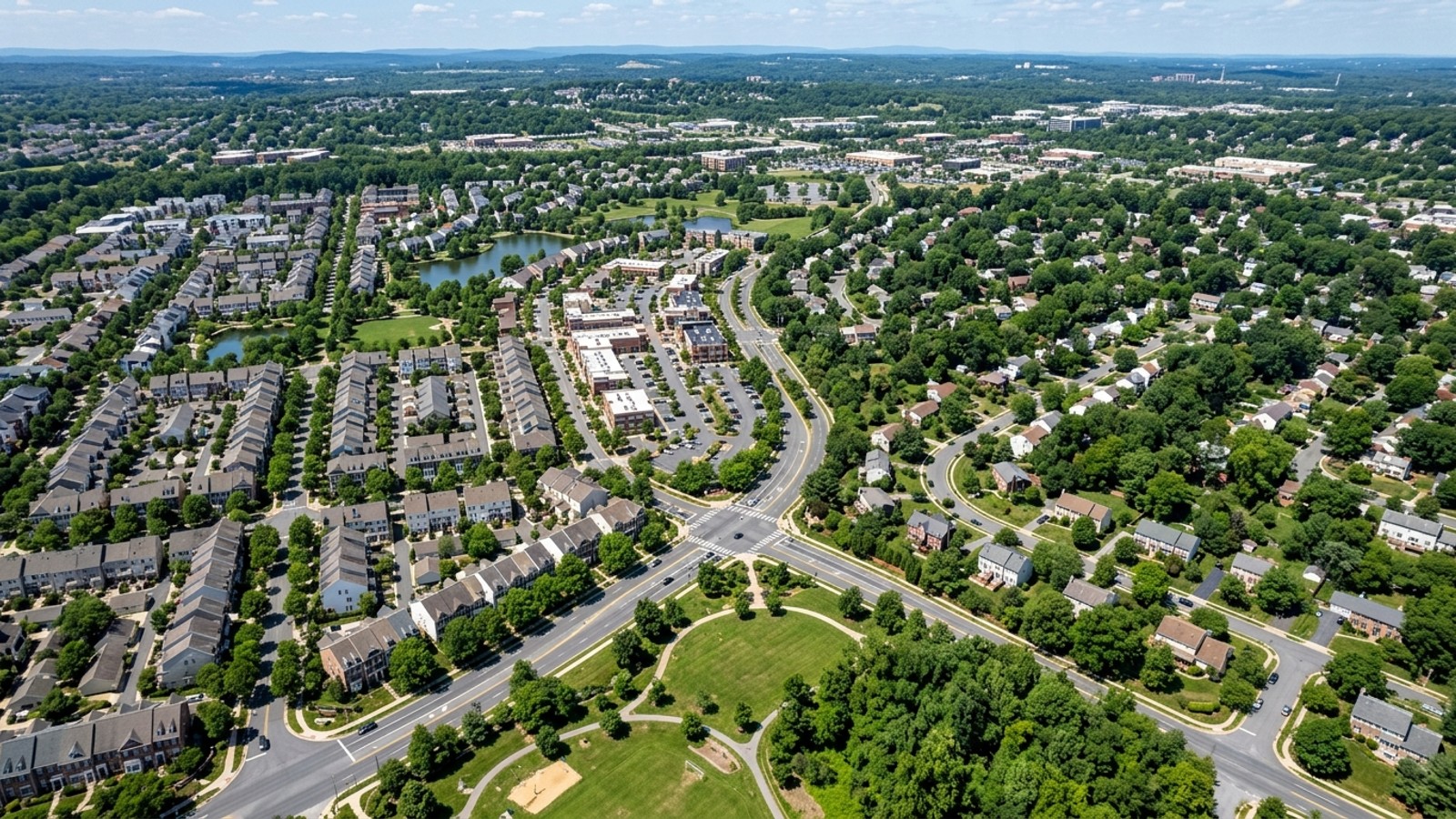
The median price for Gaithersburg homes for sale sits around $655,000 as of mid-2026. That's not a number you stumble into - it reflects a Montgomery County city that has been drawing buyers away from D.C. proper for decades, and it shows no signs of softening. What you get here is a genuine range: historic districts, new-construction developments, and master-planned urban centers, all within the same city limits.
If you're coming from outside the area, the first thing to understand is that "Gaithersburg" isn't one place. It's a collection of distinctly different communities, each with its own price point, architecture, and daily feel. The right neighborhood depends on how you actually plan to live - your commute, your budget, whether you want a front porch or a rooftop terrace.
Gaithersburg, MD Neighborhoods at a Glance
Montgomery County divides its municipalities into distinct zones, and Gaithersburg operates as a primary city within the Washington metropolitan area. That matters because you're not just buying a house - you're buying into a particular layer of local government, school zoning, and municipal services.
The housing stock here spans a remarkable range. You can find 19th-century Victorian houses near the B&O Railroad Station or a modern townhome built in the last ten years, sometimes within a mile of each other. The market moves accordingly: homes are spending roughly 30 days on the market before going under contract. With approximately 152 homes in active inventory, buyers have options at most price points - from entry-level condominiums to larger single-family estates - but the window to act isn't wide.
Location Within Montgomery County
Gaithersburg sits northwest of Washington, D.C., which puts you on a straight path toward the District and neighboring Arlington or Alexandria. For commuters, that geography matters. The presence of major employers across Montgomery County keeps housing demand steady year-round, and the location means you're not sacrificing convenience for suburban square footage.
Where Different Buyers Tend to Land
Buyers who want walkable retail tend to focus on the master-planned communities in the western part of the city. Those drawn to larger lots or older architecture look closer to the central core. Neither preference is wrong - they just point to different neighborhoods, different price ranges, and different HOA realities.
Mapping the Top Gaithersburg Communities
There's a clear divide between the older, central parts of Gaithersburg and the newer developments on the periphery. Once you see it on a map, the city's logic becomes easier to follow.
The historic downtown area, known as Olde Towne, anchors the center. To the west, large-scale developments like Kentlands and Lakelands dominate the landscape. The eastern and northern sections feature a mix of mid-century subdivisions and newer townhome clusters, including Flower Hill. Well-known areas like Quince Orchard Park, Emory Grove, and Washingtonian Woods each occupy their own slice of the city.
When you're reviewing listings, pay attention to where a property sits relative to major commuter routes and retail centers. Homes near Washingtonian Center, for example, command higher prices specifically because of that proximity. The map makes those trade-offs visible before you ever schedule a showing.
Top Neighborhoods in Gaithersburg to Call Home
Sales data from mid-2026 shows homes selling for about 100.1% of their list price on average. That figure - just above asking - tells you this is a competitive market without being a runaway one. About 40% of homes sell above asking price, which means your offer strategy matters, but you're not automatically in a bidding war on everything you like.
Narrowing down your preferred communities before you start touring is worth the effort. Some subdivisions consistently attract more buyer interest because of their design, transit access, or parks - and knowing the pricing baseline for those areas helps you make faster, smarter decisions.
Kentlands and Lakelands
Kentlands is the one that comes up most often when buyers ask where people actually want to live in Gaithersburg. Designed around New Urbanism principles, the neighborhood features pedestrian-friendly streets, artificial lakes, and a central Market Square. It's the kind of place where you can walk to a grocery store, a restaurant, and a lake without getting in your car.
Lakelands sits right next door and shares the same design philosophy - brick townhomes, large single-family houses, and condominiums. The area includes the historic Kentlands Mansion, which adds an architectural anchor that most modern subdivisions can't replicate. Property values here typically exceed the city's $655,000 median. That premium reflects the amenities, and buyers tend to accept it.
Downtown Crown and Washingtonian Center
Downtown Crown - also known as Crown Farm - represents the newer side of things. Modern construction, open floor plans, rooftop terraces, street-level retail. It's a mixed-use development that appeals to buyers who want an urban feel without actually living in the city.
The adjacent Washingtonian Center area offers similar conveniences, with homes built around a large lake and retail complex. Both neighborhoods give you immediate access to dining and entertainment, and both carry the walkability premium you'd expect.
Olde Towne and Historic Districts
Olde Towne Gaithersburg features some of the oldest housing inventory in Montgomery County. The area surrounds the 1884 B&O Railroad Station, which now serves as the Gaithersburg Community Museum, and the streets nearby are lined with Victorian-style homes and early 20th-century bungalows.
Prices here often provide a more accessible entry point - but buyers need to go in clear-eyed about older home maintenance. You're not getting a new roof warranty or a modern HVAC system in a house built a century ago.
Observatory Heights and Flower Hill
Observatory Heights sits near the Gaithersburg Latitude Observatory, a National Historic Landmark built in 1899. The residential streets around the observatory are quiet and established, the kind of neighborhood that doesn't generate much drama in either direction.
Flower Hill, further north, is a practical choice for buyers who want established suburban infrastructure without the HOA intensity of the master-planned communities. Built primarily in the 1980s and 1990s, the community includes its own neighborhood center and pool. The housing mix leans toward single-family homes and townhouses, and the price points tend to be more accessible than the western neighborhoods.
Washingtonian Woods and Quince Orchard Park
Washingtonian Woods offers a more traditional suburban layout - single-family homes, mature trees, community green spaces - with easy access to Washingtonian Center nearby. Quince Orchard Park sits near major recreational facilities and emphasizes outdoor space and pedestrian paths. Both neighborhoods have active homeowners associations, which means fees and architectural guidelines you'll want to review before you fall in love with a specific house.
Living in Gaithersburg, MD
With roughly three months of housing supply available, Gaithersburg sits in a balanced but slightly seller-favored market. The city runs its own municipal services while Montgomery County handles larger infrastructure and public education - a dual layer of local government that affects your property taxes and what services you can expect.
Local Cost of Living
Housing is the biggest number, and the $655,000 median reflects what proximity to Washington, D.C. costs. Beyond that, you'll want to factor in Montgomery County property taxes and HOA fees, which are common and sometimes substantial in master-planned communities like Lakelands. Commuting costs add up too, particularly for anyone traveling regularly into D.C. Everyday expenses track closely with broader Montgomery County averages.
Schools and Recreation
The county public school system manages enrollment and zoning for all residential addresses in the city. School boundary lines can shift between subdivisions, so verifying your specific address with the district directly is worth doing before you make an offer - not after.
The city maintains numerous municipal parks, aquatic centers, sports fields, and community centers. For a dense suburban environment, the outdoor options hold up well.
Buying a Home in Gaithersburg
Have your pre-approval letter ready before you tour anything. With 30-day median days on market and about 40% of homes selling above asking, the buyers who move confidently are the ones who close. The buyers who are still sorting out financing when the right house hits the market are the ones who miss it.
Working with a local agent who knows Montgomery County helps you track new listings in specific neighborhoods like Emory Grove or Shady Grove and understand the nuances of HOA documents and county property disclosures - details that look routine until they aren't. The current inventory of 152 homes means options exist, but the best properties don't sit. Three months of supply prevents runaway price escalation, but it doesn't mean sellers are under pressure. Set realistic expectations on negotiations and inspection requests going in.
Some buyers choose to rent in areas like Downtown Crown first - testing commute routes and neighborhood feel before committing to a purchase. That's a reasonable approach if you're relocating from outside the area. For buyers planning to stay in the Washington metropolitan area for five or more years, purchasing generally makes more financial sense than continuing to rent.
Frequently Asked Questions
Which Gaithersburg neighborhoods are best for families with school-aged children?
Kentlands and Quince Orchard Park both offer immediate proximity to parks, sidewalks, and community pools. All residential addresses fall under the county public school district, so check the specific boundary maps for any individual home you're considering - don't assume based on the neighborhood name alone.
What are the most convenient neighborhoods in Gaithersburg, MD for commuting to DC?
Shady Grove and Downtown Crown offer the most direct commuter access. Shady Grove sits near major transit points; Downtown Crown puts you on the commuter corridors leading into Washington, D.C.
How do home prices in walkable Gaithersburg communities like Kentlands and Downtown Crown compare?
Both price well above the city's $655,000 median. You're paying a premium for pedestrian access to retail, restaurants, and central squares - and in both Kentlands and Crown Farm, buyers have consistently been willing to pay it.
Where can first-time buyers find the most affordable neighborhoods in Gaithersburg?
Flower Hill and the historic Olde Towne district tend to offer lower entry prices. Both feature older housing stock - condominiums and smaller single-family homes - that generally lists below the city median. Older stock means older systems, so build that into your inspection expectations.
Which Gaithersburg subdivisions have strict HOA rules or high monthly fees buyers should watch out for?
Lakelands, Kentlands, and Washingtonian Woods all maintain active homeowners associations with specific architectural guidelines. Monthly fees in these communities run higher than average because they cover the maintenance of private lakes, pools, and community centers. Read the HOA documents before you're emotionally attached to a specific house.
What are the best up-and-coming neighborhoods in Gaithersburg for property value growth?
The areas surrounding the Shady Grove sector and newer phases of Crown Farm continue to see development and infrastructure improvements. As commercial investment expands in that part of the region, adjacent residential properties have historically maintained strong buyer demand.