


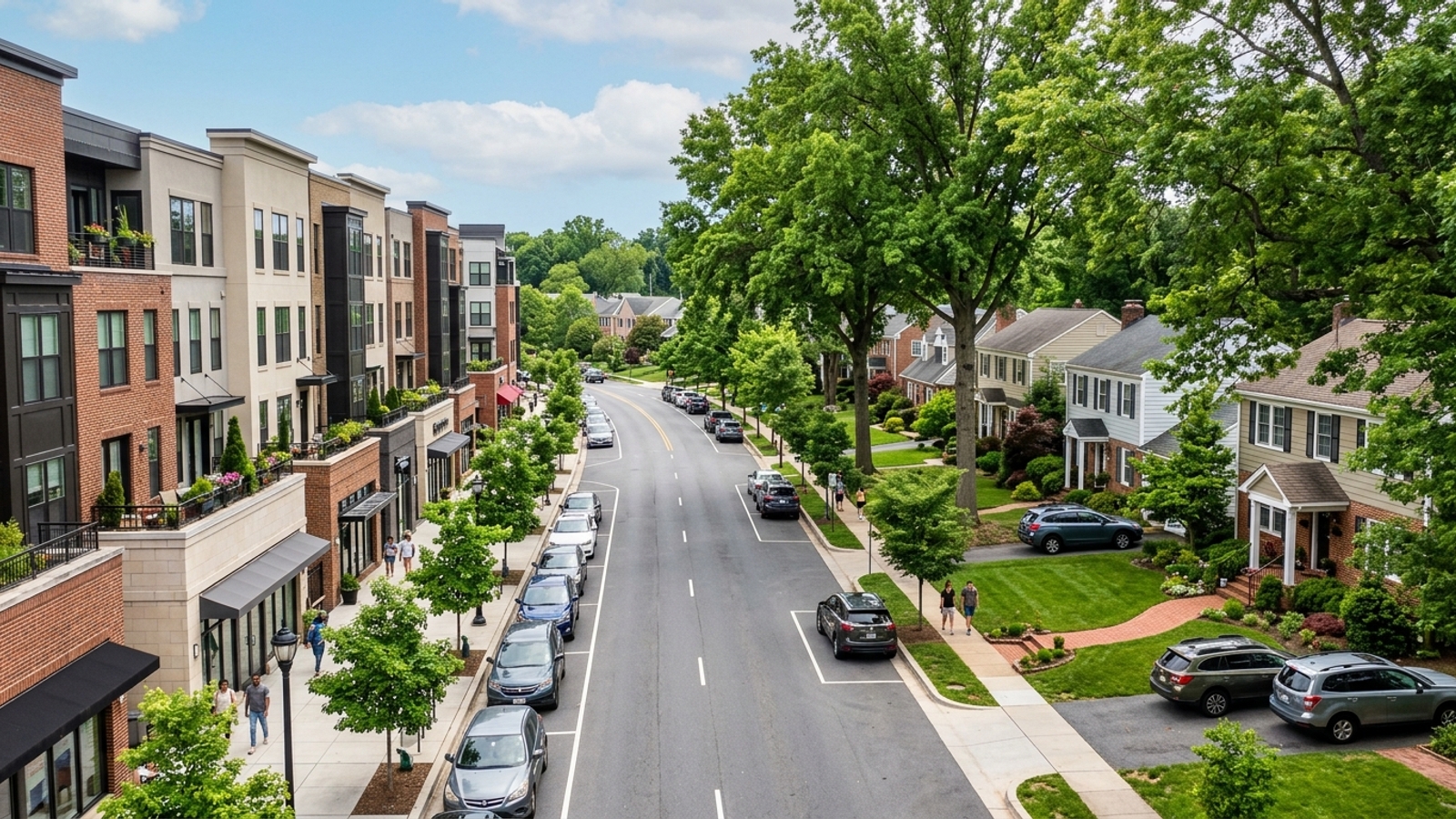
Gaithersburg, MD sits in Montgomery County with direct highway access to Washington, D.C. - and that combination drives most of the conversation when buyers weigh the pros and cons of living in Gaithersburg. You get a real mix: established residential subdivisions, newer mixed-use developments, and everything in between.
If you're eyeing the Washington, D.C. metro and trying to figure out where your money goes furthest without giving up daily conveniences, this city comes up early. The current median home price is around $655,000, so going in with a clear sense of the market keeps your search from becoming a guessing game.
Location Details and Commute Times
Gaithersburg sits approximately 27 miles northwest of Washington, D.C., anchoring the residential side of the I-270 technology corridor in Montgomery County. Most people drive I-270 South to get into the city, and under normal conditions that's about 36 to 39 minutes - though "normal conditions" on the 270 corridor is doing a lot of work in that sentence. Peak hours are peak hours, and this stretch is no exception.
Local ZIP Codes
The city is served primarily by five ZIP codes: 20877, 20878, 20879, 20882, and 20899. Several additional codes - 20883, 20884, 20885, and 20898 - also associate with the Gaithersburg mailing address, mostly unique codes and PO boxes.
This matters more than it sounds. Your ZIP code shapes your immediate surroundings and your property style. The 20877 ZIP covers the downtown City Center, while 20878 and 20879 take in the master-planned Kentlands area. It's worth knowing which one you're in before you fall in love with a listing.
Evaluating the Area for Your Relocation
The layout here is suburban, with distinct commercial centers spread across the city - meaning you're not driving 20 minutes just to find a grocery store. The housing inventory runs the range from high-density apartment complexes to single-family homes on larger lots.
One thing worth thinking through early: how close do you want to be to the I-270 ramps? The city has deeper residential pockets that are quieter and more spread out, but they'll add minutes to your daily drive. Neither choice is wrong - it just depends on what you're trading off.
Pros and Cons of the Local Market
The variety of housing within a 30-mile radius of Washington, D.C. is a genuine advantage here. Residents have access to extensive county parks, mixed-use retail centers, and well-established infrastructure.
The honest downsides: traffic along I-270 during peak hours is real and consistent, and housing costs run well above the national average. You'll need a solid budget whether you're buying or renting.
Lifestyle and Daily Amenities
Day-to-day life centers on convenient access to retail and outdoor recreation. Master-planned communities typically include their own walking paths, pools, and neighborhood commercial strips - so depending on where you land, you may rarely need to leave your immediate area for the basics.
Weekends tend to involve local shopping districts or community events throughout Montgomery County. The overall layout is car-dependent, though certain developments do prioritize pedestrian access more deliberately than others.
Housing Costs and Market Data
Homes here are spending roughly 30 days on the market before going under contract, and the median sale price is around $655,000. This is a competitive market - not frantic, but not forgiving of weak offers either.
The average sale-to-list ratio sits at 100.1%, with about 40% of homes selling above asking price. There are currently 152 active listings, representing a three-month supply. If you're a buyer, you'll want to come prepared.
Montgomery County Property Taxes
Property taxes are something buyers often underestimate until they're looking at a monthly payment. Montgomery County levies a nominal property tax rate of $0.9321 per $100 of assessed value for 2025-2026. On top of that, you'll pay the Maryland state rate of $0.112 per $100. Combined, the effective property tax rate runs approximately 0.87% based on median bills and home values.
Renting an Apartment
The rental market covers a wide range - older garden-style complexes on one end, newer luxury mid-rises on the other. Average monthly rents generally fall between $1,988 and $2,440 depending on the building's age and location.
If you're set on proximity to the downtown City Center or a newer mixed-use development, expect to be toward the top of that range. Budget for utilities and parking separately; many complexes charge extra for reserved spaces and don't include it in the base rent.
Neighborhoods and Residential Districts
Gaithersburg has enough distinct neighborhoods that the city doesn't feel monolithic. The real question is whether you want walkable urbanism or a more traditional suburban street layout - because you can find both here, and they feel genuinely different.
Homeowners associations govern many of the larger subdivisions, handling common areas, community pools, and landscaping standards. That's worth knowing before you make an offer, since HOA dues and regulations vary considerably.
Master-Planned and Mixed-Use Communities
Kentlands and Lakelands are the clearest examples of new-urbanism design in the city - built specifically to be walkable, with single-family homes, townhouses, and retail integrated into one cohesive layout. Crown and King Farm offer newer mixed-use developments with modern amenities. For buyers who want a more established suburban feel with mature trees, Montgomery Village and Quince Orchard deliver traditional single-family layouts.
Downtown Gaithersburg
The downtown district - often called Olde Towne - is the historic and civic core of the city, located in the 20877 ZIP code. The architecture is older, municipal services are close by, and the housing stock is a mix of historic single-family homes and mid-century apartment buildings.
If proximity to independent businesses and local government offices matters to you, this is where you'd look first.
Planning Your Move and Area Visits
Before you commit to anything, drive the I-270 corridor during rush hour. Not a Saturday afternoon - actual rush hour. It gives you an honest read on the daily commute to Washington, D.C. and helps you understand the scale of the region in a way no map really can.
When you visit, lodging options are scattered near the major highway exits. Staying near downtown or one of the newer mixed-use developments lets you test the dining and shopping scene in real time rather than relying on someone else's description of it.
Exploring Local Dining and Shopping
You won't have trouble finding places to eat or shop. The mixed-use developments like Crown integrate restaurants and shops directly into the residential footprint, so it's all right there. You'll find fast-casual chains and sit-down dining spread across the city's commercial zones.
Use your visit to check weekend traffic and parking in the areas you're seriously considering. It tells you things about a neighborhood that photos and listing descriptions simply don't.
Frequently Asked Questions
How much does it actually cost to buy a house and live in Gaithersburg compared to the rest of Montgomery County?
The current median sale price in Gaithersburg is around $655,000, though costs vary by neighborhood. Buyers also need to account for the county's nominal property tax rate of $0.9321 per $100 of assessed value.
Which Gaithersburg, MD neighborhoods are best for buyers prioritizing walkability and transit access?
Kentlands and Lakelands are designed specifically as walkable new-urbanism communities. Crown and King Farm also offer mixed-use layouts where retail and residential spaces are integrated for pedestrian access.
What is the most realistic daily commuting option to Washington, D.C. if I buy a home in Gaithersburg?
Driving via I-270 South is the primary commuting route to Washington, D.C. The trip is about 27 miles and typically takes 36 to 39 minutes - though peak rush hour traffic can push that higher.
Should I focus my home search in Gaithersburg or Rockville if I want the best long-term property value?
That comes down to your specific budget and housing preferences. What's clear is that Gaithersburg currently has a competitive market: a 100.1% sale-to-list ratio and about 40% of homes selling above asking price.
Are there any specific municipal taxes or strict HOA regulations I need to watch out for when buying in Gaithersburg?
Yes. Homeowners pay both the Montgomery County property tax and the Maryland state rate of $0.112 per $100 of assessed value. Many master-planned communities - including Montgomery Village and Kentlands - also carry their own HOA dues and property regulations.
How do I verify which Montgomery County Public Schools my new Gaithersburg address is actually zoned for?
Check the official Montgomery County Public Schools district website and use their boundary maps. School assignments depend on your exact street address and ZIP code - 20878 and 20879 are different, for example - so don't rely on general neighborhood descriptions to sort that out.