


If you're shopping along the I-270 corridor in Montgomery County, chances are you've already started weighing the pros and cons of living in Gaithersburg against Germantown. Both have their own housing stock, their own commercial centers, and solid access to the major transit routes that connect upper Montgomery County to Washington, D.C.
What actually separates them for a 2026 buyer comes down to three things: budget, preferred home style, and how much commute you can stomach. They sit just miles apart on the same highway, but the property tax structures and median prices are different enough to matter when you're running the numbers.
Housing Market and Home Prices
The median home sale price in Gaithersburg sits around $655,000 as of mid-2026, with homes spending roughly 30 days on the market. Sellers are closing at about 100.1% of list price - essentially full ask - and inventory is tight, with around 152 available homes translating to roughly three months of supply.
Germantown is a different conversation. Median prices there range from $375,000 to $421,000, depending on the neighborhood and property size. Buyers who get priced out of Gaithersburg frequently turn to Germantown specifically because it keeps them on the same highway corridor without blowing the budget.
Home Styles in Gaithersburg
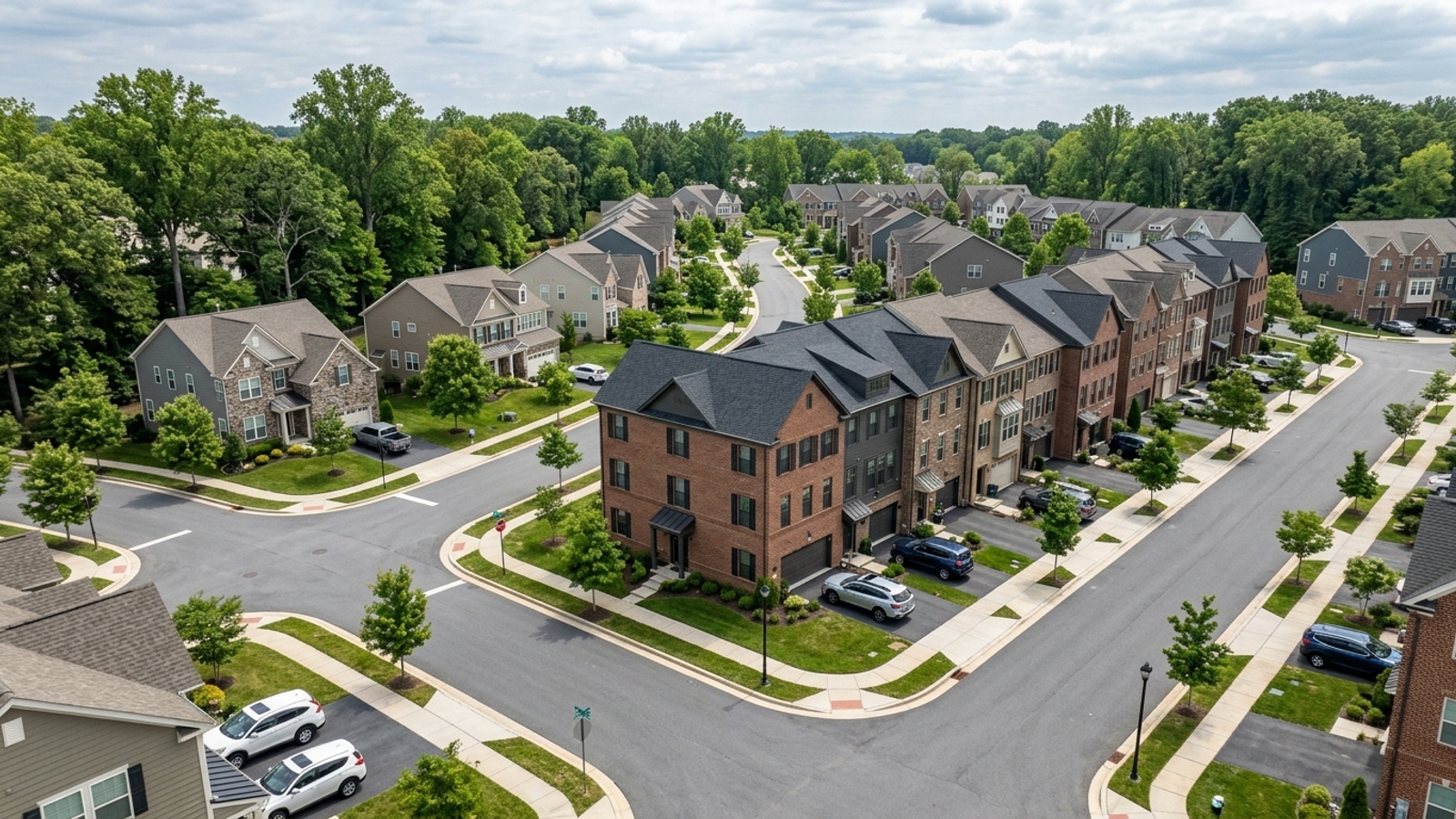
Gaithersburg's architecture varies more than most people expect. The Kentlands and Lakelands developments are built around neo-traditional, new-urbanism design - walkable streets, prominent front porches, the whole thing. Washington Grove, one of the older sections, runs toward Victorian-style properties. On the east side of the city near I-270, you'll find modern condominium complexes and newer townhouse developments.
Home Styles in Germantown
Germantown's housing stock is largely townhomes, condominiums, and single-family homes in planned communities. The names you'll hear most often are Seneca Crossing, Waters Landing, and Kingsview Village - uniform streetscapes, integrated amenities, that kind of setup. The sheer volume of townhomes in the mix is the main reason the overall median price stays lower than in neighboring municipalities.
Cost of Living and Property Taxes
This is where the two markets really diverge, and it's worth slowing down here.
Gaithersburg residents pay a municipal property tax rate of $0.262 per $100 of assessed value on top of the standard Montgomery County rate. That combined structure puts the median effective property tax rate at about 1.18%, and it can reach up to 1.22% in ZIP codes like 20878.
Germantown is unincorporated, which means no separate municipal tax. Homeowners there pay only the Montgomery County rate - roughly 0.9786% to 1.04% per $100 of assessed value - and the median annual property tax bill comes out to approximately $3,436. Buy the same house in Gaithersburg and you're paying more, full stop.
Municipal Tax Differences
That $0.262 per $100 surcharge in Gaithersburg funds local municipal services, road maintenance, and city-managed parks. It's real money, and it should factor into your monthly payment calculations whenever you're comparing identical sale prices across the two areas.
Germantown relies solely on Montgomery County for those services, so its residents skip the municipal surcharge entirely.
Overall Affordability
Put it together - median prices of $375,000 to $421,000 plus no municipal tax - and Germantown is the more affordable option by a meaningful margin. You can often land a larger property or newer construction for the same monthly payment you'd make on something smaller in Gaithersburg.
Gaithersburg's higher costs do come with incorporated city infrastructure, and some buyers genuinely value what that buys them. But go in clear-eyed about the carrying costs.
Location, Commutes, and Transit Options
Both towns sit directly on the I-270 corridor, the main artery running upper Montgomery County down to the Capital Beltway. Gaithersburg also has Route 355, the I-370/ICC connector, and Great Seneca Highway, which runs north from Germantown straight through Gaithersburg into Rockville.
Driving from Gaithersburg to Washington, D.C. runs 30 to 60 minutes depending on the time of day and how badly I-270 South is behaving. Germantown is further north along the corridor, so add time and distance to that baseline.
Highway Access and Transit Centers
Gaithersburg has its own MARC train station on the Brunswick Line with direct service to Union Station, and it sits close to the Shady Grove Metro station - the Red Line terminus - supported by local Ride On bus routes.
Germantown commuters work out of the Germantown Transit Center, where you can connect to the Shady Grove Metro or catch express bus routes heading south on I-270.
Travel Times to Washington, D.C.
Gaithersburg's position further south is a real advantage for anyone driving or taking transit into D.C. or Bethesda. Being close to the Shady Grove Metro means less time on connector buses or in the car just getting to the station.
From Germantown, the baseline is longer. If you're working in the city, I'd strongly encourage you to drive both routes during actual rush hour before you commit - the difference shows up in the daily grind more than on a map.
Local Amenities and Recreation
Gaithersburg has some serious retail weight. The RIO Washingtonian Center is a 760,000-square-foot lakefront development with big-box names like Target, Dick's Sporting Goods, and Kohl's, plus more than 25 restaurants. Downtown Crown adds a Harris Teeter, Lululemon, and Sephora to the mix, and Kentlands Market Square covers your everyday needs with a Giant and Whole Foods.
Germantown's retail is concentrated in the Milestone District and the areas near the transit center - convenient, highway-adjacent, and built for practicality.
Parks and Outdoor Spaces
Gaithersburg's outdoor anchor is Seneca Creek State Park, where you can hike, bike, and fish around Clopper Lake. The city also maintains Bohrer Park, which has a water park and trail network, and City Park in Olde Towne Gaithersburg with its playground and picnic gazebo.
Germantown's signature outdoor destination is Butler's Orchard - a 300-acre U-Pick farm that hosts large seasonal events, including the annual Pumpkin Festival and Bunnyland. It's a different kind of recreation than what you get in Gaithersburg, but it draws a crowd.
Shopping and Dining Hubs
The Kentlands and Downtown Crown give Gaithersburg genuinely walkable dining options across several distinct commercial centers. You can hit a mix of national chains and local restaurants without touching the highway.
Germantown's commercial spaces are built around convenience - retail hubs near major intersections and highway exits, with the Milestone District handling most of the grocery runs, daily errands, and casual dining.
Frequently Asked Questions
Is it more expensive to buy a home in Gaithersburg, MD compared to Germantown?
Yes. The median home sale price in Gaithersburg is around $655,000, while median prices in Germantown range from roughly $375,000 to $421,000. You'll also pay higher property taxes in Gaithersburg because of the municipal surcharge on top of the county rate.
How much longer is the daily commute to Washington, D.C. or Bethesda from Germantown versus Gaithersburg?
Germantown's commute is longer - it sits further north along the I-270 corridor. Driving from Gaithersburg to Washington, D.C. takes 30 to 60 minutes; from Germantown, add more time to cover the extra distance down to the Shady Grove Metro or the beltway.
Are property taxes and local municipal fees higher in Gaithersburg or Germantown?
Gaithersburg is higher. The city charges an additional municipal tax of $0.262 per $100 of assessed value on top of the Montgomery County rate. Germantown is unincorporated, so residents there pay only the base county rate.
What are the main differences in neighborhood amenities and walkability between Gaithersburg and Germantown?
Gaithersburg has walkable, neo-traditional neighborhoods like the Kentlands and pedestrian-friendly retail hubs like Downtown Crown and RIO Washingtonian Center. Germantown is built around planned subdivisions and highway-adjacent retail like the Milestone District - convenient, but a different feel.
Do single-family homes in Gaithersburg hold their resale value better than comparable properties in Germantown?
Both markets are solid, but Gaithersburg is showing intense buyer demand right now. Homes there spend a median of just 30 days on the market and are selling at 100.1% of list price.
Will I find more new construction homes and modern HOA communities in Germantown or Gaithersburg?
Both areas have planned communities. Germantown's housing stock is largely defined by townhome and single-family subdivisions like Seneca Crossing and Waters Landing. Gaithersburg also has newer condominium and townhouse developments, particularly on the east side of the city near I-270.