


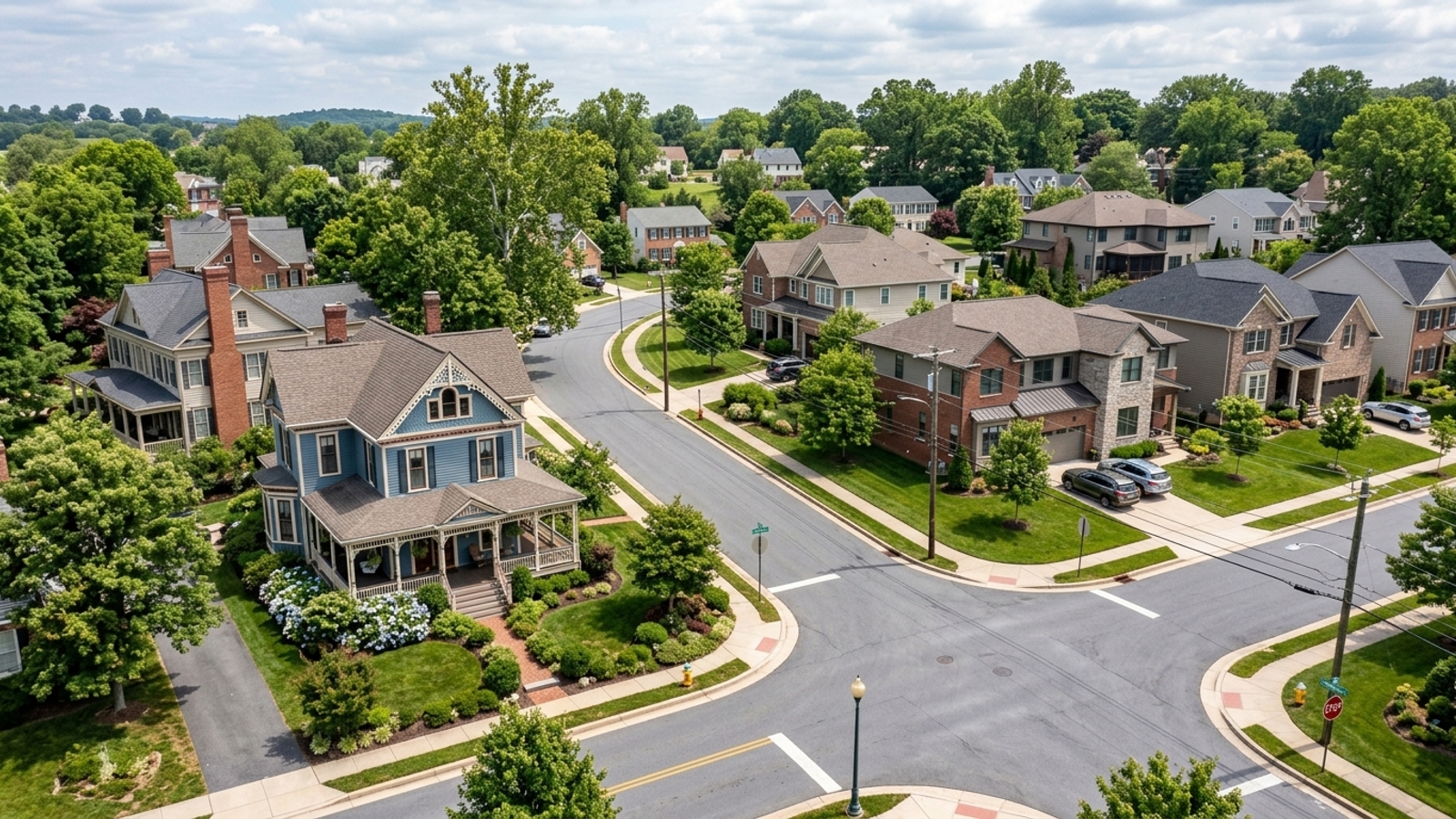
Gaithersburg, MD, started as a small agricultural settlement and grew into one of the primary residential hubs of Montgomery County. Anyone weighing the pros and cons of living in Gaithersburg, MD will find a modern suburb with deep historical roots - late 19th-century architecture standing shoulder-to-shoulder with contemporary developments. The median home price sits around $655,000, which reflects sustained demand for properties within the Washington-Arlington-Alexandria metro area.
That history isn't just interesting background. It shapes the city's layout, neighborhood boundaries, and which blocks fall inside historic districts. From its early days as a rural crossroads to its current status as an incorporated city, Gaithersburg's physical footprint has evolved in layers - and those layers directly affect what's available, what you can do with a property, and how the local infrastructure got built the way it did.
Early Origins and the Founding of Gaithersburg
The area now known as Gaithersburg was originally settled in 1765 under the name "Log Town." It stayed a modest collection of buildings until 1802, when Benjamin Gaither built a house near the area's well-known Forest Oak tree and set up a blacksmith shop, a store, and a tavern on the site. That commercial cluster drew more residents, and the name followed naturally from there.
The 1802 construction of Gaither's home and businesses is widely cited as the official founding date of the community. It also explains why so much of the city's early identity is tied to that central core - the surrounding neighborhood grew outward from it.
From Incorporation to City Status
The community officially incorporated as the town of Gaithersburg on April 5, 1878, which enabled localized governance and structured public services as the population grew. Then, decades later, the region suburbanized rapidly following World War II, and Gaithersburg officially became a city in 1968.
Location and County Boundaries
Gaithersburg sits entirely within Montgomery County, Maryland, and serves as a major suburb within the Washington-Arlington-Alexandria, DC-VA-MD-WV Metropolitan Statistical Area. That positioning puts it squarely in a commuter corridor with direct access to the employment centers of the nation's capital and surrounding commercial hubs.
One practical upside for buyers: because it falls within a single county, you don't have to untangle overlapping county tax rates or navigate competing municipal jurisdictions. The market moves at a steady pace - homes are currently averaging roughly 30 days on the market - but don't mistake steady for slow. Active inventory sits around 152 available homes across the city, and competition is real.
Historic Districts and Local Landmarks
The Gaithersburg B&O Railroad Station and Freight Shed is the area's most prominent historic landmark. Built in 1884 and designed by architect Ephraim Francis Baldwin, the brick structure was the backbone of the town's transportation network and agricultural shipping industry for decades. It was officially listed on the National Register of Historic Places in 1978.
If you want to see early 20th-century residential architecture, Observatory Heights is worth a walk. The neighborhood was platted in 1911 and named after the nearby National Landmark Latitude Observatory. Development there continued through the 1950s, which accounts for the streetscape's range - Victorian, bungalow, foursquare, and Colonial Revival homes, all on the same block.
The Gaithersburg Community Museum
The Gaithersburg Community Museum occupies the restored 1884 B&O Railroad Station complex in Olde Towne. It uses the original Freight House and surrounding History Park to display local artifacts, and there's historic rolling stock on the tracks outside - a straightforward, tangible record of how the railroad shaped this economy. Worth an hour if you're getting serious about the area.
What Gaithersburg Is Known For Today
Gaithersburg has produced some recognizable names. Olympic gymnast Dominique Dawes is from here, as are NFL players Stefon Diggs and Trevon Diggs. Major League Baseball player Chris Coghlan also has ties to the city.
On the government side, former mayor Sidney A. Katz - a lifelong resident born in 1950 - is one of the more prominent figures in the city's modern history, having guided the municipality through significant periods of residential and commercial growth. Today Gaithersburg holds its identity as a major Montgomery County hub, with its historical sites and modern suburban infrastructure existing in the same zip codes, sometimes on the same street.
Frequently Asked Questions
What restrictions apply to exterior renovations if I buy a home in a Gaithersburg historic district?
It depends on the specific local zoning and historic preservation ordinances. If a home is located in a designated historic neighborhood like Observatory Heights, exterior changes often require approval from a local historic district commission. Review the city's historic preservation guidelines before you start planning major renovations - not after.
Are there local tax credits available for restoring historic properties in Gaithersburg, MD?
Yes. Property owners in Montgomery County may be eligible for certain historic preservation tax credits, which generally apply to approved rehabilitation work on the exterior or structural elements of designated historic homes. Confirm current program rules and application deadlines directly with the county tax office, since these details change.
How do property values in historic Gaithersburg neighborhoods like Olde Towne compare to newer developments?
It varies by property condition, lot size, and level of modernization. Historic homes in areas like Olde Towne often draw strong interest because of their architectural character - the Victorian and Colonial Revival styles you'll find locally aren't easy to replicate. The median home price across Gaithersburg as a whole is currently around $655,000, and historic properties can land above or below that depending on their state of repair.
How can I find out if a Gaithersburg home is on the historic registry before making an offer?
Check the Maryland Historical Trust or the local Montgomery County historic sites registry. Your agent can also pull property disclosures and municipal zoning records to verify historic status. Do this early - it directly affects what you're allowed to do with the exterior of the property, and you want to know that before you're under contract.
When were Gaithersburg's major residential neighborhoods originally developed?
Development spans several centuries. Early settlement started around 1802 when Benjamin Gaither built his home. Observatory Heights was platted in 1911 and saw continued development through the 1950s. Suburban expansion accelerated after Gaithersburg officially became a city in 1968.
Are special inspections required when buying a historic home in Gaithersburg, MD?
No mandatory special inspections are required by law just for purchasing a historic home. That said, hire an inspector with real experience in older construction. Aging foundations, outdated electrical systems, and historical materials common in early 20th-century homes require someone who knows what they're actually looking at.